

 Google Reviews
Are dental implants worth it? Losing a tooth can be a life-altering experience that affects not only your physical appearance but also your confidence and overall quality of life. The journey of adjusting to a missing tooth can often lead to emotional distress, impacting daily activities such as eating and speaking. Fortunately, modern dentistry has made remarkable advancements in tooth replacement options, with dental implants emerging as a leading choice for many individuals seeking a reliable and effective solution.
But the question remains: are dental implants worth it? This comprehensive guide will explore the multifaceted benefits of dental implants, the factors you must consider before committing to the procedure, a comparison with alternative tooth restoration options, and ultimately help you navigate the decision-making process regarding your oral health.
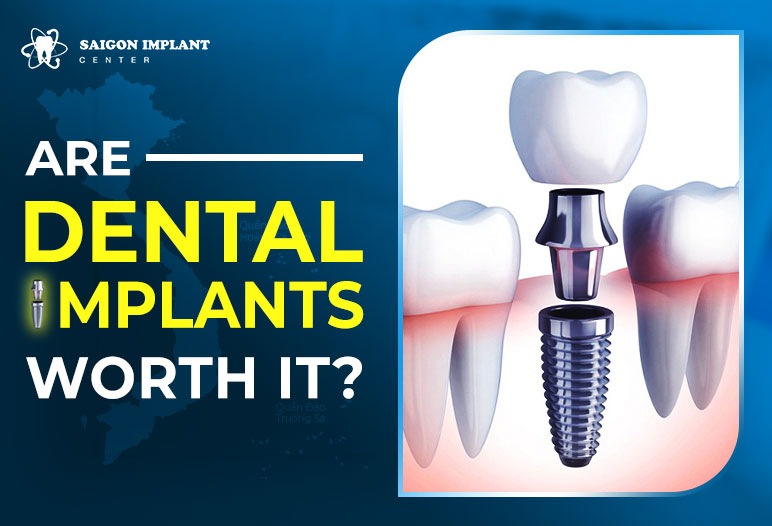
Are Dental Implants Worth It?
Not every missing tooth needs a dental implant. And not every dental implant is automatically “worth it.”
The better question is: What are you actually paying for? If you’re comparing dental implants with a bridge or removable denture based only on the initial price, implants almost always seem expensive.
But if you’re looking at how well you’ll chew five years from now, whether your jawbone will continue shrinking, how many times you’ll need to replace your restoration, and how confidently you’ll eat or smile every day, the conversation changes.

That is why there is no universal answer to whether dental implants are worth the investment. For some patients, an implant is the most conservative and predictable long-term solution.
For others, another treatment may be more appropriate depending on their oral health, medical condition, treatment goals, and budget.
This guide doesn’t aim to convince you to choose implants. Instead, it explains when dental implants provide the greatest long-term value, when they may not be the best option, and which factors should influence your decision before starting treatment.
Quick Answer:
For many patients, yes. Dental implants are often worth the investment because they replace both the visible tooth and its root, helping restore chewing function, preserve jawbone, and support long-term oral health.
However, their value depends less on the implant itself and more on choosing the right treatment for the right patient. A comprehensive examination—including your oral health, bone condition, bite, and treatment goals—is essential before deciding whether implants are the most appropriate solution.
Top Benefits of Dental Implants Compared to Other Tooth Replacement Options
For many patients, the question is no longer “How much does an implant cost?” It becomes “What problems could I avoid over the next 10 or 20 years by replacing this tooth properly today?”
Restore More Than Just Your Smile
Replacing a missing tooth is about much more than filling an empty space. A well-planned implant allows chewing forces to be distributed more naturally, making everyday eating more comfortable while helping maintain a balanced bite.
Many patients notice that after treatment they no longer need to avoid certain foods or chew on only one side of the mouth.
Help Preserve the Jawbone After Tooth Loss
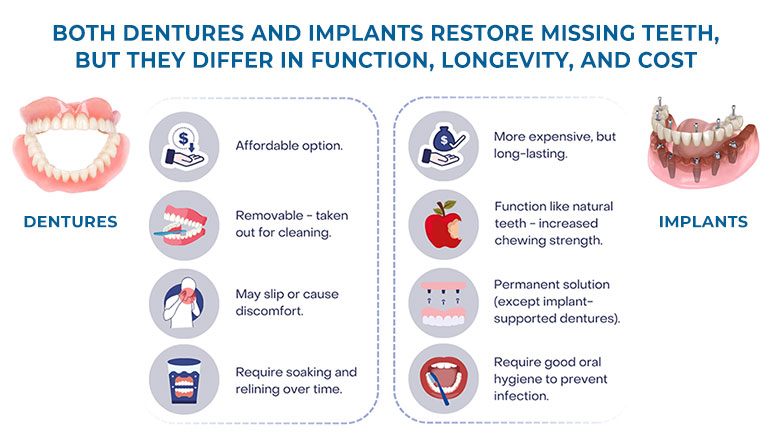
One of the biggest differences between dental implants and other replacement options is that an implant replaces the tooth root as well as the visible crown.
After a tooth is removed, the surrounding jawbone gradually loses stimulation and naturally begins to shrink. This process cannot always be seen immediately, but it may affect future treatment options and even facial support over time.
By transferring chewing forces into the jawbone, dental implants help maintain the bone in a way that bridges and removable dentures cannot.
Preserve Healthy Teeth Whenever Possible
One principle of modern dentistry is simple: Whenever possible, healthy teeth should remain untouched.
Unlike a conventional bridge, a single implant usually does not require adjacent healthy teeth to be prepared for support. Preserving natural tooth structure today may reduce the need for additional restorative treatment in the future.Think Beyond Today’s Treatment Cost
Dental implants generally involve a higher upfront investment than bridges or removable dentures.
However, cost should also be viewed over the lifetime of the restoration.
Bridges, dentures and other prosthetic options may eventually require replacement, repair or adjustment. Although every patient is different, many people choose implants because they are looking for a solution that prioritises long-term stability rather than the lowest initial cost.
Dr. Nguyen Ngoc Tan: “When patients ask me whether dental implants are worth the investment, I usually ask a different question first:
‘What are you hoping this treatment will allow you to do again?’ For some people, it is enjoying a meal without discomfort. For others, it is speaking confidently, protecting the remaining teeth, or avoiding more complicated treatment later. That is why I rarely recommend treatment based on cost alone. The decision should always consider your oral condition today and how you want your teeth to function many years from now.”
Dental implants provide a revolutionary approach to tooth replacement by acting as artificial roots that are surgically anchored into the jawbone. These implants support crowns, bridges, or dentures, making them a versatile option for those seeking a functional and aesthetic solution to tooth loss. Below, we will dissect some of the primary benefits associated with dental implants.
Are Dental Implants the Right Choice for You?
Dental implants are often the right choice if you want a stable, long-term solution that restores chewing function while preserving the surrounding teeth and jawbone. However, they are not the best option for every patient. The right treatment depends on your oral condition, bone health, and long-term goals—not simply on the number of missing teeth.
Choosing a dental implant is not about replacing every missing tooth. It is about deciding whether an implant offers the best long-term outcome for your situation.
For many patients, these are the situations where implants are most commonly recommended.
You want to preserve healthy teeth
If the teeth next to the missing space are healthy, a dental implant can replace the missing tooth without preparing or reducing those neighboring teeth. This helps preserve natural tooth structure whenever possible.
You want a fixed solution
If removable dentures feel uncomfortable, move while eating, or affect your confidence when speaking, implant-supported restorations may provide greater stability and a more natural chewing experience.
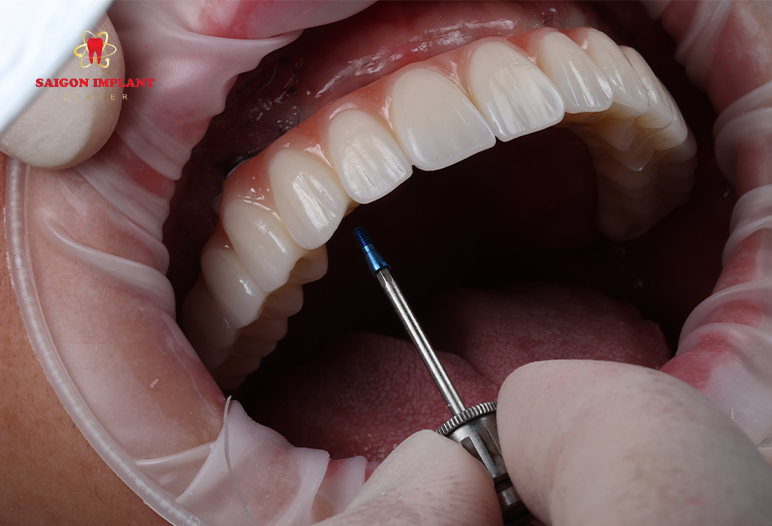
You are thinking long term
Dental implants usually require a higher initial investment, but many patients choose them because they are designed to provide long-term function and reduce the need for repeated restorative treatment.
You still have enough bone—or it can be rebuilt
Bone loss does not always mean implants are impossible. Modern CBCT imaging allows dentists to assess whether implant treatment is still feasible, with or without additional procedures such as bone grafting.
Decision Guide
| If your goal is to… | Dental implants may be a good option |
|
Preserve healthy neighboring teeth |
Yes |
|
Replace missing teeth with a fixed solution |
Yes |
|
Restore natural chewing function |
Yes |
|
Invest in a long-term treatment |
Yes |
| Maintain jawbone after tooth loss | Yes |
Not every missing tooth should be replaced with an implant right away. Some patients need gum treatment first. Others may need bone grafting before implant placement. In certain cases, another treatment option may simply be the better choice. My priority isn’t placing an implant—it’s choosing the treatment that offers the most predictable long-term outcome. – Dr. Nguyen Ngoc Tan – Dentist implant specialist at Saigon Implant Center
Why Do Dental Implants Cost More Than Bridges or Dentures?
When you invest in dental implants, you’re not simply paying for a titanium implant or a ceramic crown. You’re investing in accurate diagnosis, careful treatment planning, precise execution, and long-term stability. These are often the factors that determine how well an implant performs years after treatment.
One of the questions patients ask most often is: “Why do dental implant costs vary so much from one clinic to another?”
The answer is rarely the implant itself. Two patients may receive the same implant system, yet experience very different long-term outcomes. In many cases, the difference comes from everything that happens before, during, and after the implant is placed. In other words, you’re not only paying for an implant—you’re investing in the quality of the entire treatment process.
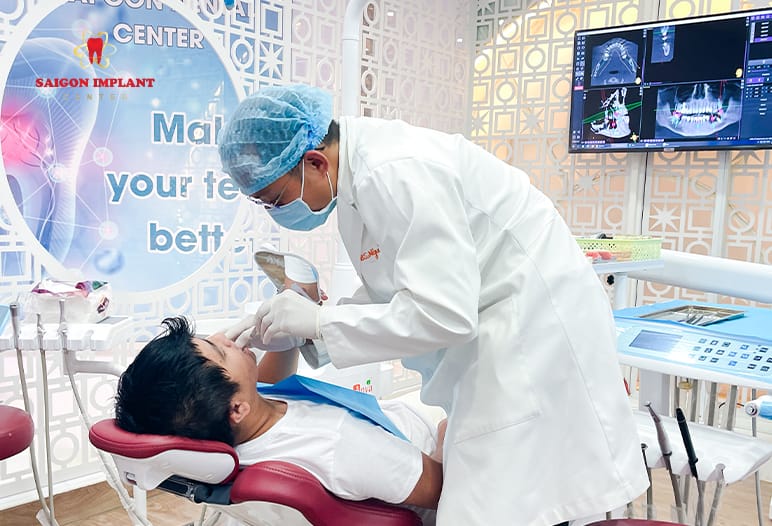
Accurate Diagnosis Comes First
Successful implant treatment begins with understanding the patient, not choosing an implant brand.
Before recommending treatment, your dentist should evaluate bone quality, gum health, bite relationship, the cause of tooth loss, and any medical conditions that could affect healing. Sometimes, the most important decision is not whether an implant can be placed—but whether it should be placed now or after treating the underlying condition first.
A Treatment Plan That Fits You
There is no single implant protocol that works for everyone. Some patients are suitable for immediate implant placement after tooth extraction. Others achieve better long-term outcomes after periodontal treatment, bone grafting, or additional preparation. The goal is not to perform more procedures. The goal is to choose the treatment that is most appropriate for your individual situation.
Precision Matters More Than It Looks
Two implant crowns may look almost identical once treatment is complete. What patients cannot see is often what matters most. The implant position, angulation, surrounding bone, soft tissue management, and bite balance all influence how comfortably the implant functions and how well it performs over the years.
These details are planned long before the final crown is delivered.
Long-Term Care Protects Your Investment
Implant treatment doesn’t end when the crown is attached. Regular follow-up appointments allow your dentist to monitor the health of the surrounding bone and gums, identify early changes, and help maintain the stability of the implant over time. For many patients, this ongoing care is an important part of long-term success.
Real Patient Stories: Are Dental Implants Really Worth It?
Many of the patients we see at Saigon Implant Center don’t come to us planning to get dental implants. Some have been wearing removable dentures for years, while others have previously chosen a bridge because it was the right solution at that stage of life.
As their needs evolve, they begin looking for a more stable and predictable long-term solution. After a comprehensive clinical assessment and an open discussion about the advantages and limitations of each treatment option, many decide to proceed with dental implants—not because implants are universally better, but because they are the most appropriate choice for their individual condition and long-term goals.
Real Patient Decision: From Removable Dentures to Fixed Full-Arch Implants
Teeth conditions
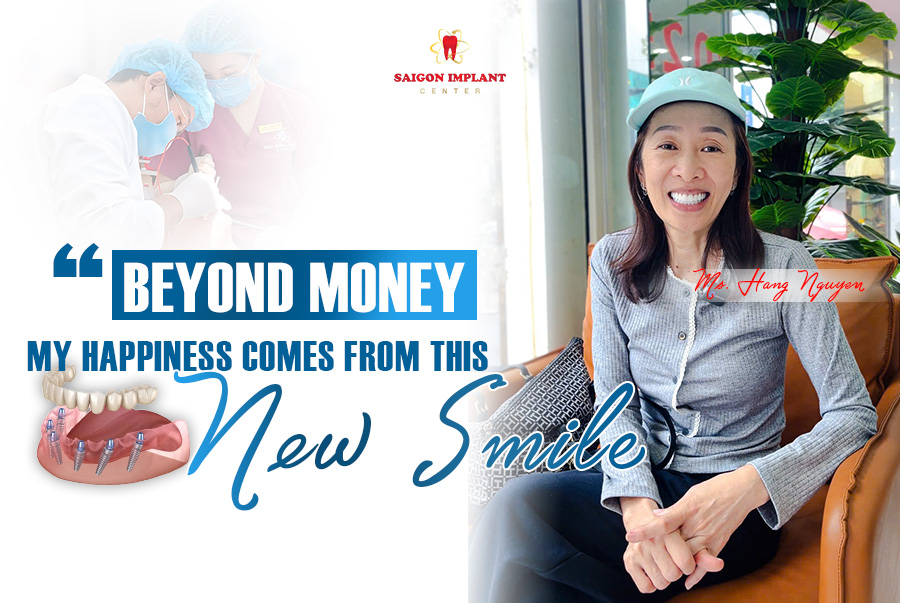
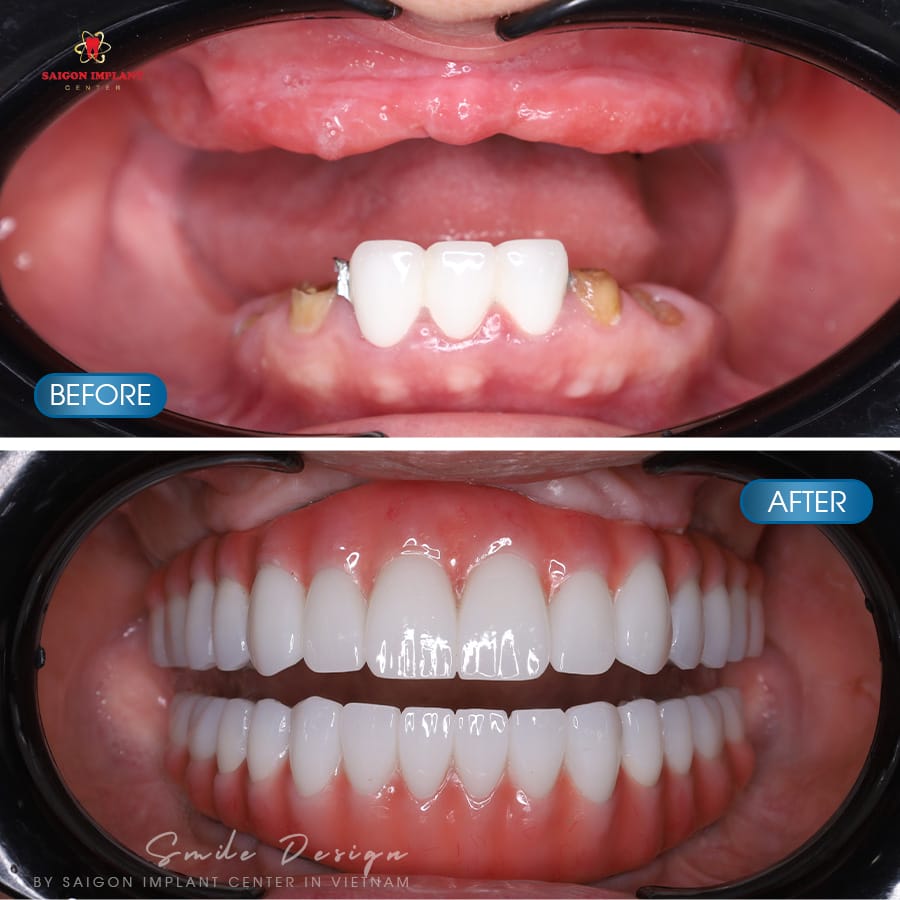
For nearly ten years, Ms. Hang, a Vietnamese-American living in the U.S., relied on removable dentures. She could still eat, but never comfortably. She often worried about her dentures moving while speaking and gradually stopped smiling in public, choosing to wear a face mask whenever possible.
Although she had explored dental implants in the U.S., the cost kept her from moving forward.
After a comprehensive consultation in Vietnam, she chose a fixed full-arch implant because she wanted to stop adapting her life to removable dentures.
Are dental implants worth it?
According to Ms. Hang, the biggest difference wasn’t having new teeth—it was being able to eat, smile, and talk without thinking about them anymore.
Dental Implants vs. Removable Dentures: Ms. Hang Shares Her Journey with Both Treatments
Real Patient Decision: A Smile Worth Traveling to Vietnam For
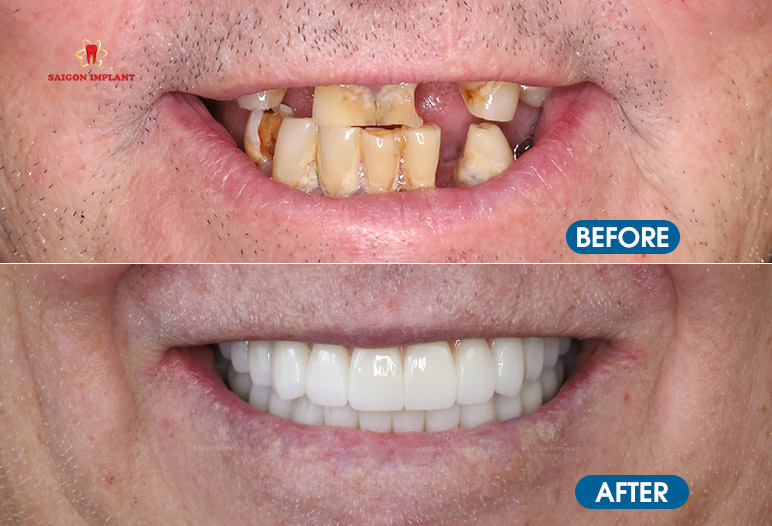
Before coming to Vietnam, Mr. Shane had lost several teeth, and many of the remaining ones were beyond saving. During our consultation, he joked, “My smile scares people.” Behind the humor was someone who had spent years hiding his smile and struggling to enjoy everyday meals.
After discussing all treatment options, he chose full-mouth dental implants in Ho Chi Minh City, Vietnam.
Was it worth it?
Shane’s answer was simple: “It’s worrth while I had smile that used to scare people now i have got a simple poeple like!”
Dental Implant Journey
Real Patient Decision: From Living with Pain to Enjoying Every Meal Again
For years, Ms. Linh To from Australia lived with advanced gum disease. Eating became painful, and many of her favorite foods gradually disappeared from her meals. Smiling also became something she did less often—not because she wanted perfect teeth, but because she no longer felt comfortable with her own smile.
After a thorough examination and discussion of her treatment options, she decided to move forward with a fixed full-arch dental implant.
Was it worth it?
When we asked her what had changed the most, she didn’t mention the implants themselves.
She simply smiled and said, “I can finally enjoy a steak again without pain. I didn’t realize how much I’d been missing that.”
For her, that simple moment said more than any before-and-after photo ever could.
Was Dental Implant Worth It? Ms. Linh To’s Story
Conclusion: Are dental implants worth it?
For most people, yes—but only when dental implants are the right treatment for their individual condition.
The value of a dental implant isn’t measured by the titanium post or the ceramic crown. It’s measured by what it allows you to keep: comfortable chewing, healthy jawbone, natural function, and the confidence to smile without thinking twice.
Throughout this article, you’ve seen that dental implants are not always the only treatment option. In some situations, a bridge or removable denture may be more appropriate. That’s why a proper diagnosis and treatment plan are always more important than choosing a procedure.
If there’s one takeaway, it’s this: The best dental treatment isn’t the newest or the most expensive one. It’s the one that gives you the most predictable long-term outcome. When dental implants are recommended for the right reasons, planned carefully, and maintained properly, they are often one of the most valuable long-term investments you can make—not just for your smile, but for your overall quality of life.
FAQ
What actually happens biologically when a dental implant fuses with the body?
A dental implant bonds with your jawbone through a natural healing process called osseointegration. During this process, new bone grows directly onto the titanium surface, creating a stable foundation that functions like a natural tooth root.
Is dental implant surgery painful?
Most patients describe implant surgery as less uncomfortable than a tooth extraction. The procedure is performed under local anesthesia, and any mild soreness afterward is usually manageable with routine pain medication.
Does smoking affect dental implant success?
Yes. Smoking reduces blood flow to the gums and bone, slowing healing and increasing the risk of implant complications. Quitting or reducing smoking before and after surgery can improve long-term success.
Am I too old for dental implants?
Age alone is not a limiting factor. Overall health, bone quality, and healing ability are far more important. Many healthy patients in their 70s and 80s successfully receive dental implants.
What is peri-implantitis?
Peri-implantitis is an infection around a dental implant that can damage the surrounding bone. Good oral hygiene, regular dental check-ups, and professional cleanings help prevent this condition.
Are zirconia implants better than titanium implants?
Not necessarily. Titanium implants have the strongest long-term clinical evidence, while zirconia implants may be suitable for selected patients who prefer a metal-free option. The right choice depends on your individual case.
How soon can I get a dental implant after tooth extraction?
It depends on your bone and gum condition. Some patients are suitable for immediate implant placement, while others achieve better long-term results after healing for several weeks or months.
Will dental implants affect my taste or make my teeth sensitive?
No. Dental implants do not affect your sense of taste. Because implant crowns contain no living nerve tissue, they also do not develop hot or cold sensitivity like natural teeth.
 Call
Call Booking
 Chat
Chat