


 Google Reviews
At Saigon Dental Implants Center, we offer free consultations for patients interested in dental implant bridge services. Receive a detailed treatment plan and up to 30% off implant services, helping restore your smile and chewing function. Don’t miss this opportunity to experience our services.
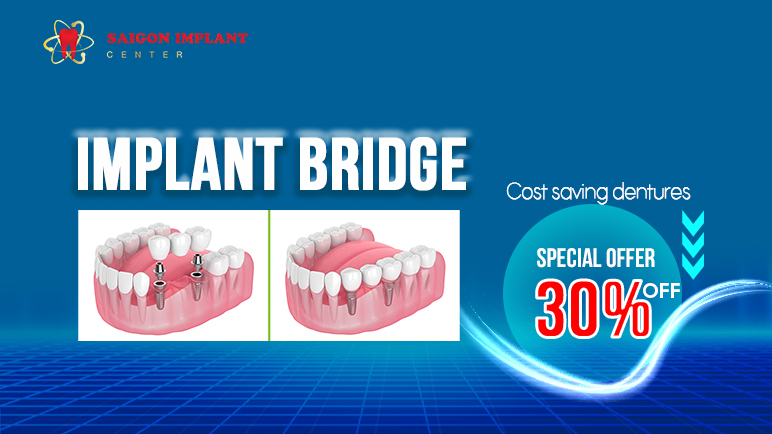
What is a Dental Implant Bridge?
A dental implant bridge is a restorative solution for replacing multiple missing teeth. Unlike a traditional bridge, which relies on natural teeth for support, an implant bridge is supported by dental implants placed in the jawbone. This provides a stable foundation for the replacement teeth and can help restore chewing function and the appearance of your smile. An implant bridge may be a suitable option for patients who are missing several teeth in a row.
How Does a Dental Implant Bridge Work?
In a typical tooth implant procedure, dental implants are placed into the jawbone, where they gradually integrate with the bone to create a stable foundation. Once the implants have healed and fused with the jawbone, a custom-made dental bridge is attached to the implants. The bridge is designed to restore the function and appearance of natural teeth. Unlike traditional bridges, which require neighboring teeth to be filed down for support, an implant bridge does not rely on adjacent healthy teeth, helping to preserve them.
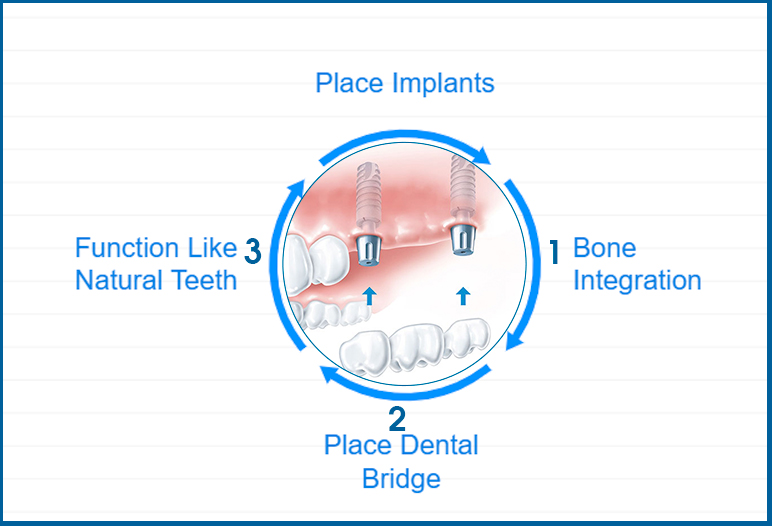
Advantages of a Dental Implant Bridge
Strength and Stability: One of the key advantages of a fixed bridge supported by dental implants is its strength and stability. Since the bridge is anchored to implants placed in the jawbone, it provides a secure foundation for the replacement teeth and can feel more stable than a conventional bridge.
Preservation of Jawbone: Like other implant procedures, an implant-supported bridge can help preserve the jawbone after tooth loss. Dental implants stimulate the surrounding bone and may help reduce bone loss over time, helping maintain the natural shape of the jaw and face.
Longevity: With proper care and regular dental check-ups, a dental implant bridge can provide a long-term solution for missing teeth. Its lifespan can vary depending on factors such as oral health, bite, and daily care.
Aesthetic Appeal: The implant bridge can be custom-made to match the surrounding teeth in color, shape, and size. This helps create a natural-looking smile while also restoring chewing function.
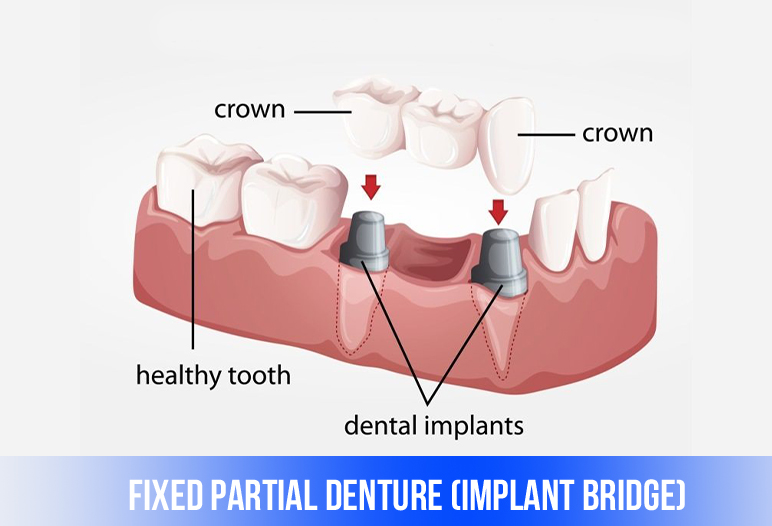
Bridge implant dental is an advanced restorative dental
When is a dental implant bridge the right choice?
A dental implant bridge may be considered for patients who are missing multiple teeth and have enough healthy bone to support dental implants. If several teeth are missing in a row, an implant bridge can provide a stable, fixed option compared with a traditional bridge or partial denture. It may also be suitable for patients who want to avoid preparing healthy neighboring teeth for a conventional bridge.
Dentists may recommend an implant bridge in the following cases:
- Multiple consecutive missing teeth, such as three or more teeth
- Extensive tooth loss in the upper or lower jaw
- Periodontal disease that has left the remaining teeth unsuitable to support a traditional bridge
- Patients looking for a durable fixed restoration
- Patients with reduced jawbone density who may require additional evaluation before implant treatment
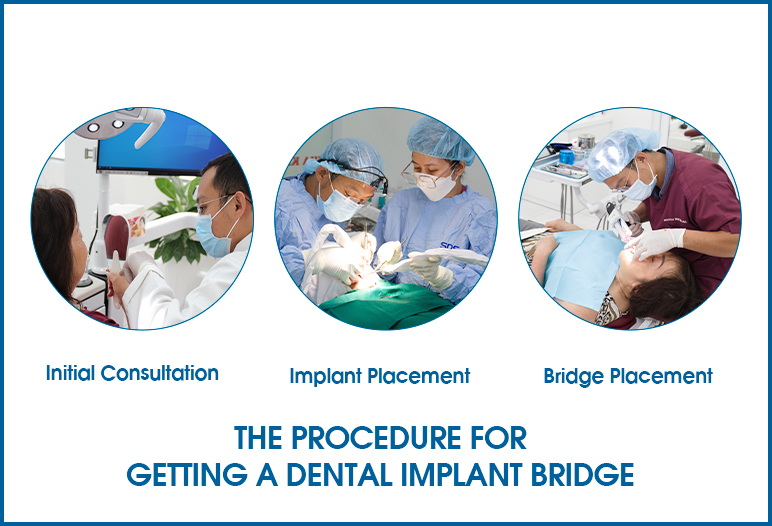
The Procedure for Getting a Dental Implant Bridge
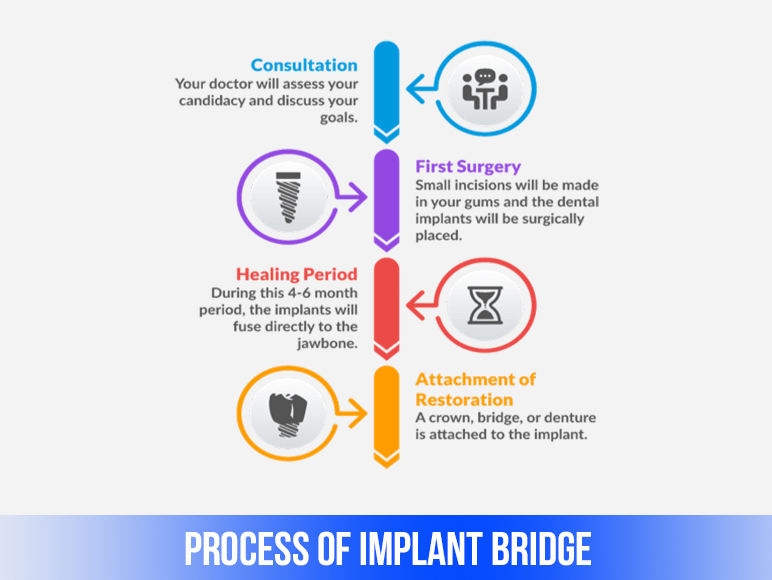
The process of getting a dental implant bridge typically involves several stages:
- Initial Consultation: Your dentist will assess your oral health, jawbone condition, and overall suitability for dental implants. Imaging may also be used to evaluate the available bone and plan the treatment.
- Implant Placement: During the surgical phase, dental implants are placed into the jawbone at the sites of the missing teeth. The implants then need time to integrate with the surrounding bone, which can take several months.
- Bridge Placement: Once the implants have integrated with the jawbone, your dentist will take impressions to create a custom implant crown and bridge. Once the restoration is ready, it will be securely attached to the implants.
Comparison of Dental Bridge vs Implant: Which Is the Better Choice?
When replacing missing teeth, dental bridges and dental implants are two common treatment options. Each has its own benefits and limitations, and the right choice depends on factors such as your oral health, the condition of the surrounding teeth and jawbone, and your treatment needs. Understanding the differences can help you discuss the most suitable option with your dentist.
What Is a Dental Bridge?
A dental bridge is a prosthetic restoration used to replace missing teeth by connecting one or more artificial teeth to the neighboring teeth. With a traditional bridge, the adjacent teeth are usually prepared to support crowns that hold the bridge in place.
An implant-supported bridge works differently. Instead of relying on natural teeth for support, the bridge is attached to dental implants placed in the jawbone.
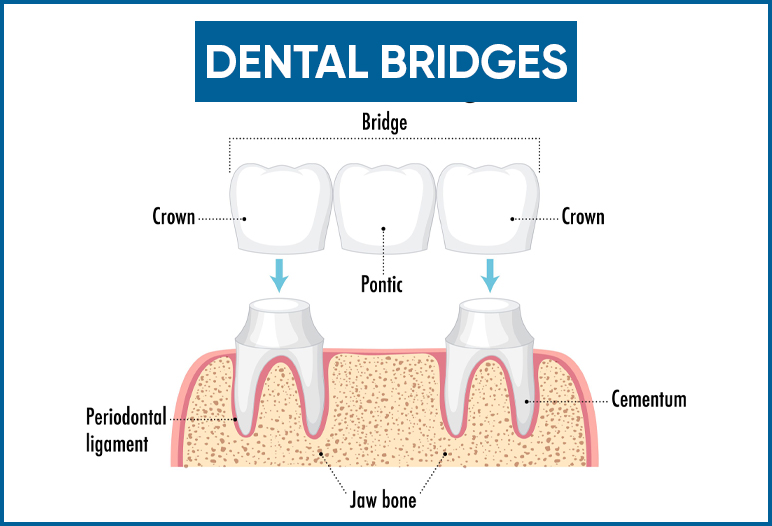
Advantages of a Dental Bridge:
- Quick procedure: A traditional dental bridge can usually be completed faster than a dental implant procedure, often within a few days or weeks depending on the case. Learn more about teeth replacement options.
- Lower cost: A traditional dental bridge is generally less expensive than a dental implant, although the total cost depends on the treatment and materials used.
Disadvantages of a Dental Bridge:
- Requires preparation of natural teeth: A traditional bridge usually requires the adjacent teeth to be prepared to support the crowns. This means some healthy tooth structure may need to be removed.
- Does not prevent bone loss: Unlike dental implants, a traditional bridge does not replace the tooth root, so it does not stimulate the jawbone at the site of the missing tooth.
- May need replacement over time: A dental bridge does not last permanently and may need to be replaced over time. Its lifespan varies depending on oral health, bite, materials, and daily care.
What is a Dental Implants?
A dental implant involves placing a titanium implant into the jawbone, where it gradually integrates with the surrounding bone. After the healing process is complete, a custom-made crown is attached to the implant to replace the visible part of the missing tooth. Compared with dentures or traditional bridges, dental implants can provide a stable, fixed solution for replacing missing teeth, depending on the patient’s oral health and treatment needs.
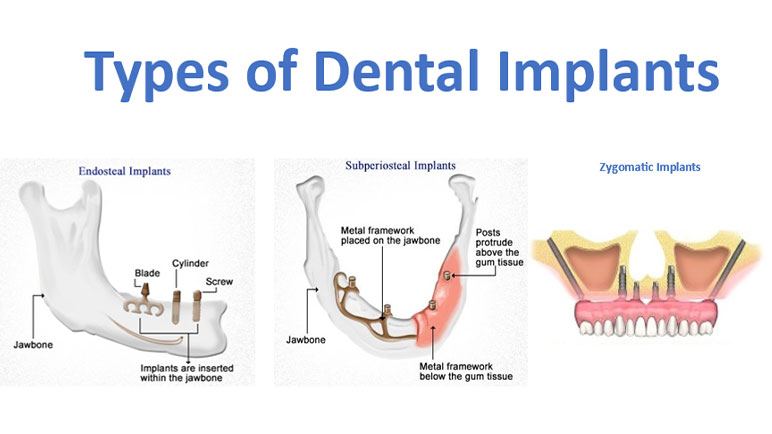
Advantages of a Tooth Implant
- Prevents bone loss: Unlike a traditional dental bridge, a dental implant replaces the tooth root and helps stimulate the jawbone, which may help maintain bone density.
- Long lifespan: With proper care, a tooth implant can last for many years and may provide a longer-lasting solution than a traditional bridge.
- No impact on neighboring teeth: Dental implants do not rely on adjacent teeth for support, helping preserve the surrounding healthy teeth.
Disadvantages of a Tooth Implant
- Higher cost: When comparing dental implants vs dental bridges, implants tend to be more expensive due to the surgical procedure and materials involved.
- Longer treatment time: Implant treatment usually takes longer because the implant needs time to integrate with the jawbone before the final restoration can be placed.
Dental Bridge or Implant: Which Is Better?
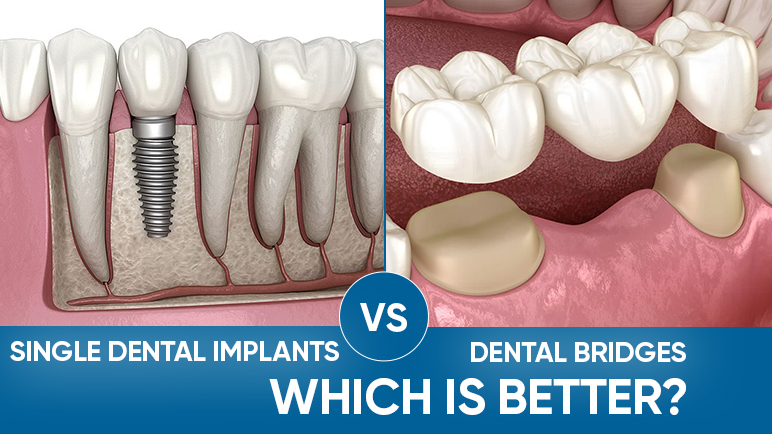
When comparing dental bridges and implants, understanding the advantages and disadvantages of each option can help you make an informed decision. Several factors should be considered:
- Oral health: If you have enough healthy jawbone, a dental implant bridge can provide a stable, long-term solution. If there is not enough bone, a bone graft may be recommended before implant treatment.
- Budget: If cost is an important factor, a traditional dental bridge may be a more affordable option. When comparing a crown, implant, and bridge, the total cost depends on the treatment and materials required.
- Durability: If you are looking for a long-term tooth replacement, dental implants can provide a durable solution. With proper care, they can last for many years.
Crown Bridge Implant: Pros and Cons
The difference between a dental implant and a bridge lies in how they replace missing teeth and support the surrounding structures. Dental implants replace the tooth root and can help preserve the jawbone, but they are generally more expensive and require a longer treatment time. A traditional bridge can be a quicker and more affordable option, but it relies on neighboring teeth for support and may need replacement over time.
When comparing the pros and cons of a bridge versus an implant, key factors include cost, treatment time, durability, and the condition of the surrounding teeth and jawbone. For front teeth, an implant-supported restoration can provide a natural-looking and durable result when appropriate for the patient.
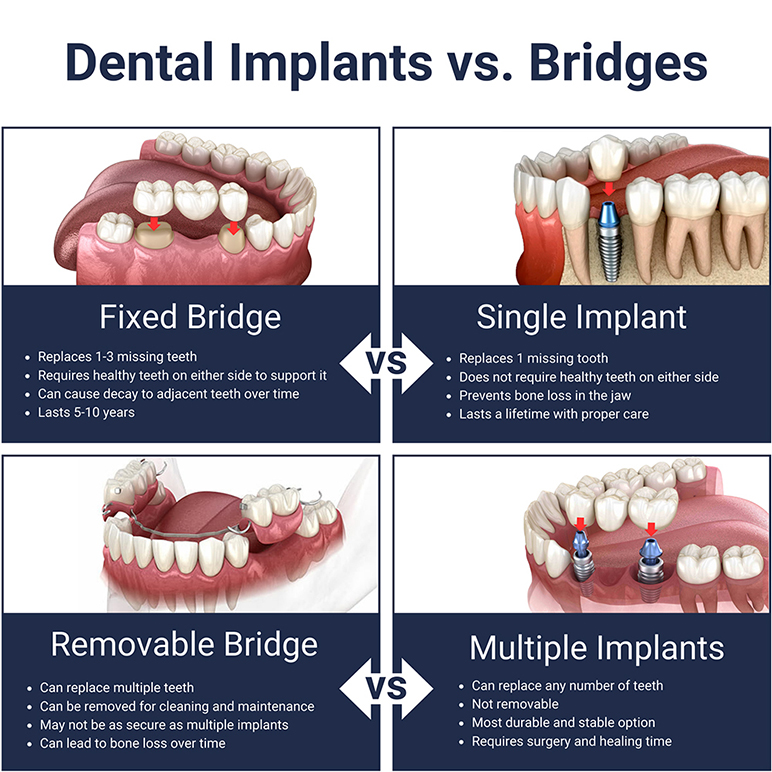
Dental bridge implant vs. other denture methods
When choosing between a dental bridge and an implant, factors such as bone health, budget, and long-term goals should be considered. Dental implants may be suitable for patients looking for a durable solution that does not rely on neighboring teeth, while a bridge can offer a quicker and more affordable option.
Ultimately, the right choice depends on your oral health, personal needs, and treatment goals. A consultation with your dentist can help determine the most suitable option.
Dental Implant Bridges at Saigon Dental Implants Center in Vietnam
Saigon Dental Implants Center is the leading implant center in Vietnam. Our clinic is renowned for its safe and high-quality Dental Implants, Implant Bridges, and Dental Restoration services, with rapid tooth restoration within 24 hours.
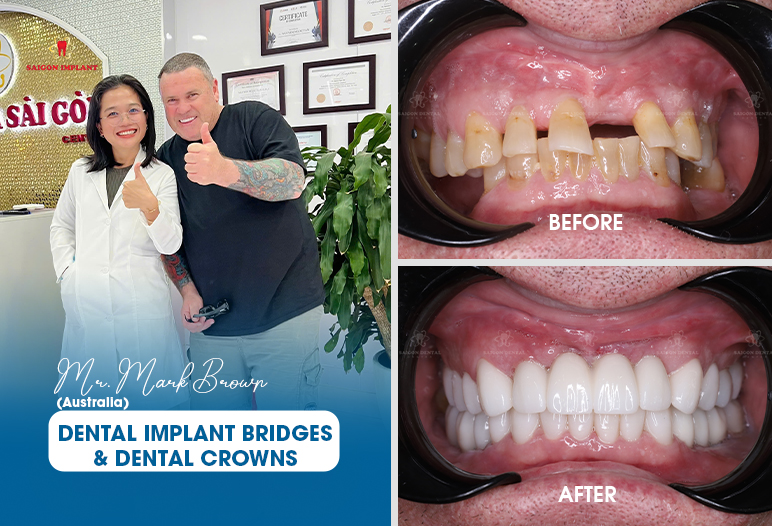
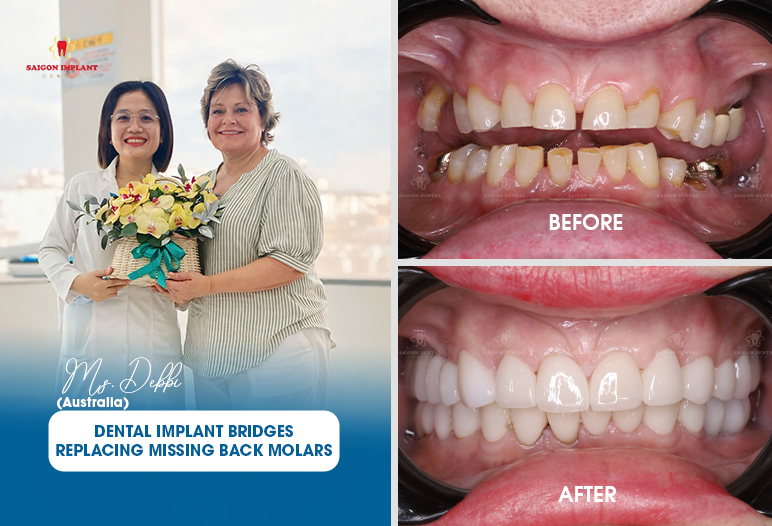
Before and After Photos of Implant Bridges
At Saigon Dental Implants Center, we provide implant bridge treatments tailored to each patient’s needs. Explore our before and after photos to see changes in the appearance and function of the teeth, and learn how treatment can help restore your confidence in your smile.
Full Arch Implant Bridge Treatment Process
The implant bridge procedure typically involves several stages and can take from a few weeks to a few months, depending on the patient’s specific condition and other factors. Here is a detailed description of each stage with estimated times:
- Examination and Treatment Planning (30 minutes)
The doctor will perform a clinical examination, take X-rays or CT scans to assess the jawbone and oral condition. Then, a detailed plan for the number, location of implants, and bridge design will be created.
- Implant Placement (30 – 120 minutes)
The doctor will perform surgery to place the implant posts into the jawbone under local anesthesia. The implant surgery typically lasts from 30 minutes to 2 hours, depending on the number of implants needed.
- Impression for Temporary Teeth (1 day)
Impressions will be taken to create and fit a temporary restoration to replace the missing teeth.
- Designing the Implant Bridge (2 days)
Impressions will be used to make an accurate model for designing the implant bridge.
- Fitting the Implant Bridge
The patient will try the implant bridge, and adjustments will be made for bite alignment and aesthetics.
What to Expect at Saigon Dental Implants Center?
Personalized Treatment
We provide personalized treatment plans based on each patient’s condition, needs, and goals. Your dentist will discuss suitable treatment options based on your timeline, budget, and individual needs.
Comfortable Treatment
With modern anesthesia techniques and advanced dental technology, we aim to make treatment as comfortable as possible. Our ALL-ON-X/ProArch approach may help simplify treatment in suitable cases, potentially reducing the need for bone grafting and the overall treatment time.
Modern Facility
Our center is equipped with modern dental technology and equipment to support accurate diagnosis, treatment planning, and implant procedures.
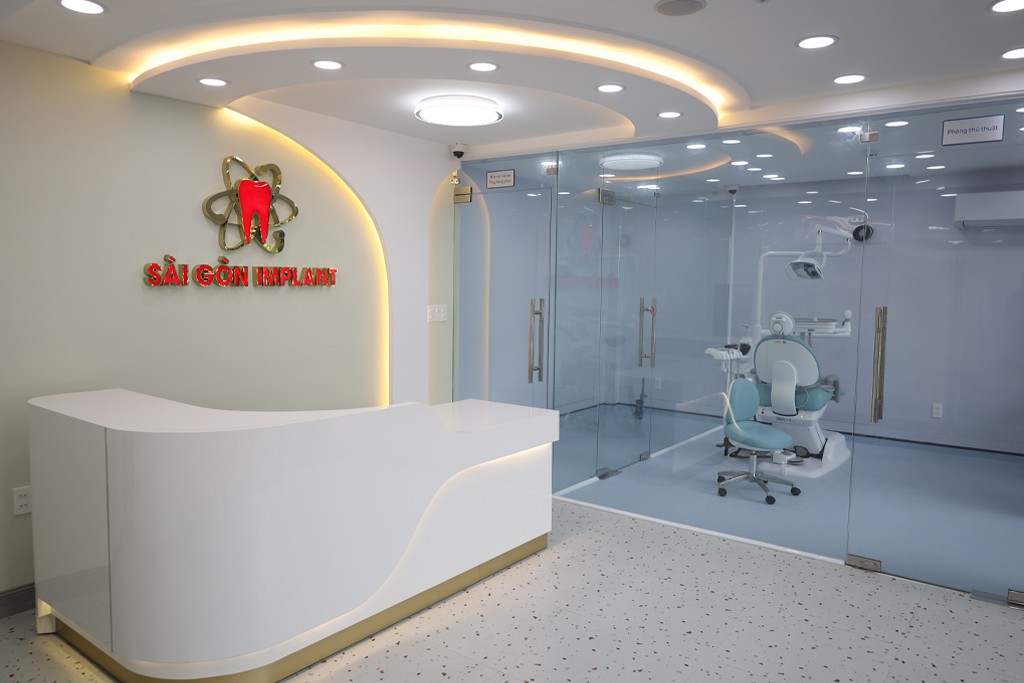


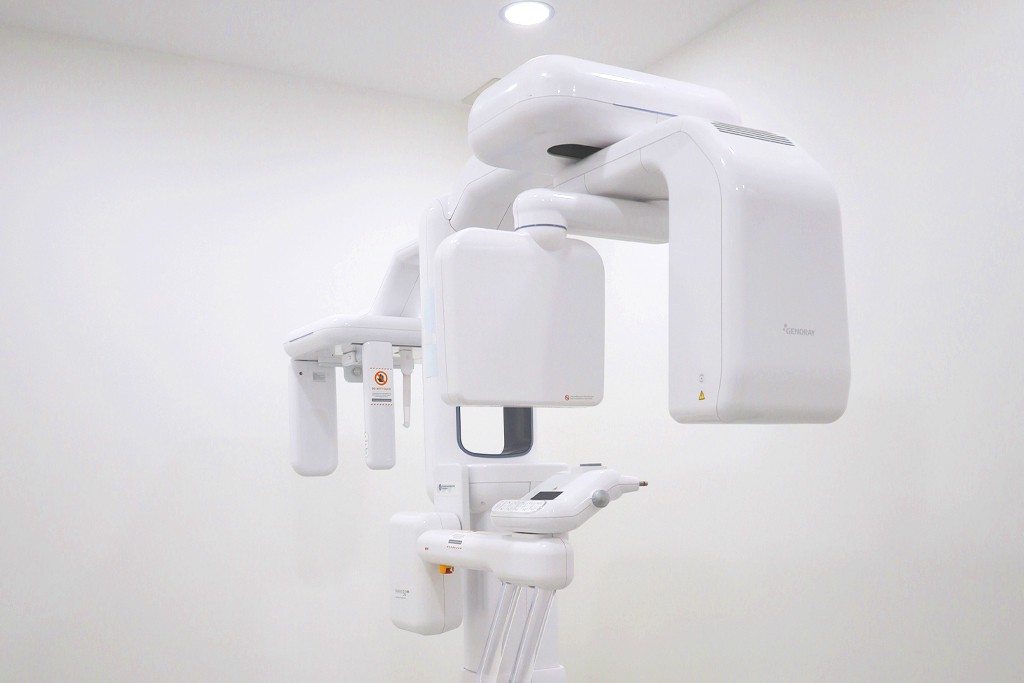

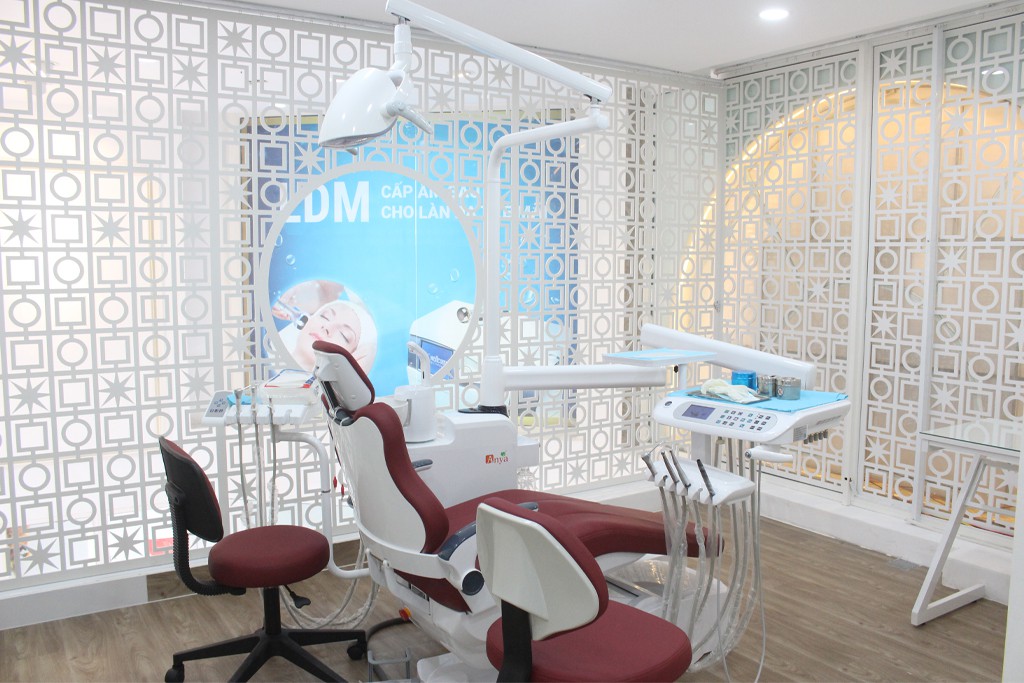


High-Quality Materials
We use a range of implant materials from established brands, including Straumann, Neodent, Nobel, and Dentium. For dental restorations, materials such as Zirconia, Cercon HT, and Lava Plus may be selected based on the patient’s treatment needs, with a focus on durability and natural-looking aesthetics. Learn more about implant materials.
Patient Reviews
Patient reviews provide insight into their experiences with our treatments and services. Explore their feedback to learn more about the patient experience at our center.


How Much Does a Dental Implant Bridge Cost?
The cost of a dental implant bridge at Saigon Dental Implants Center depends on several factors, including the number of missing teeth, the type of materials used, and your jawbone condition. Here is a pricing guide for your reference.
 The price list for various types of implant abutments
| TREATMENT | PRICE IN USD | NOTE |
| Premium Korea Implant (Dentium) | $720 | per implant |
| Superline Implant (America) | $880 | per implant |
| JD Dental Implant (Italy) | $1,000 | per implant |
| Kontact / Neodent Implant (France / Switzerland) | $1,000 | per implant |
| Nobel / Straumann SLA Active Implant (Switzerland) | $1,400 | per implant |
| Titanium-porcelain Restoration | $120 | per crown |
| Full Zirconia CAD/CAM Crown on Implant | $320 | per crown |
The cost of porcelain tooth restoration on implants and other associated expenses
| TREATMENT | PRICE IN USD | NOTE |
| Abutment (Free with Implant Treatment) | $240 | per unit |
| Bone graft | $240 – $320 | per site |
| Sinus lift | $320 – $480 | per site |
| Implant for bridge support / Implant Locator | $240 | per implant |
| Temporary tooth restoration | $40 | per tooth |
| Immediate, painless temporary tooth | $160 | per tooth |
| Immediate High-Strength Temporary Prosthesis for All-on-4/6 | $600 – $800 | per arch |
 We offer free consultations to determine the exact cost and financial solutions suitable for you. Contact us now!
- Our Address: 119 Yersin, Ben Thanh Ward, Ho Chi Minh City, Vietnam
- Hotline: (+84) 971 199 986
- Email: saigonimplantdental@gmail.com
- Working Time: Mon – Sat: 08:00 – 18:00
- Online Consultation & Booking 24/7
- Operating License: 09396/HCM-GPHĐ
- Scope of Operation: Dental Specialty Clinic
Available Payment Options and Benefits
We offer various support options such as free consultations, treatment planning, and flexible payment methods to make it easier for you to access our implant bridge services without financial difficulties.
Conclusion
Dental implant bridges are an optimal solution for restoring dental function and aesthetics, providing long-term stability and maintaining jawbone structure. Accurate procedures and good patient cooperation ensure high effectiveness, helping restore your smile and improve your quality of life.
Frequently Asked Questions (FAQs)
An implant-supported bridge can last between 10 to 20 years, depending on proper care and maintenance. With good oral hygiene and care, the implant bridge can last long-term.
An implant bridge can support 2 to 4 missing teeth. The number of teeth to be replaced will be determined based on the patient’s specific condition and the doctor’s assessment.
The process of placing an implant bridge is generally not painful due to effective anesthesia methods. You may experience some discomfort once the anesthesia wears off, but this typically subsides within a few days.
If you have any further questions or need more information, feel free to contact us at Saigon Dental Implants Center. We are always here to assist you!
 Call
Call Booking
 Chat
Chat