

 Google Reviews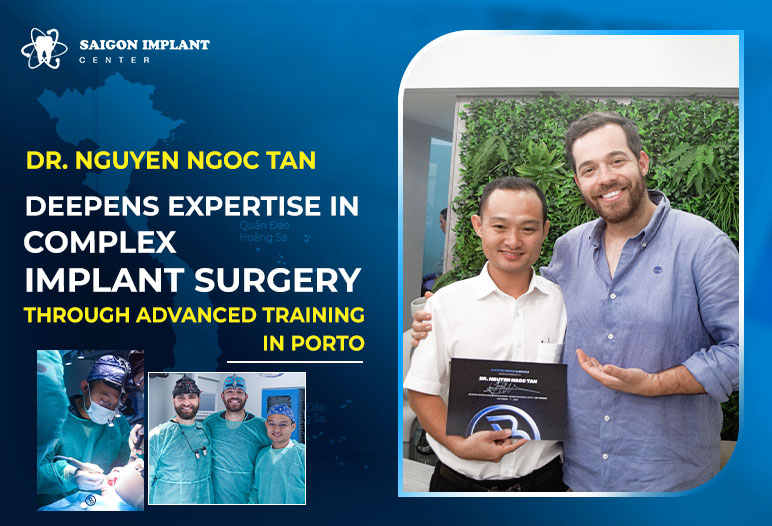

Content professionally reviewed by Dr. Nguyen Ngoc Tan
DDS, Dental Implants Specialist Trained in Brazil
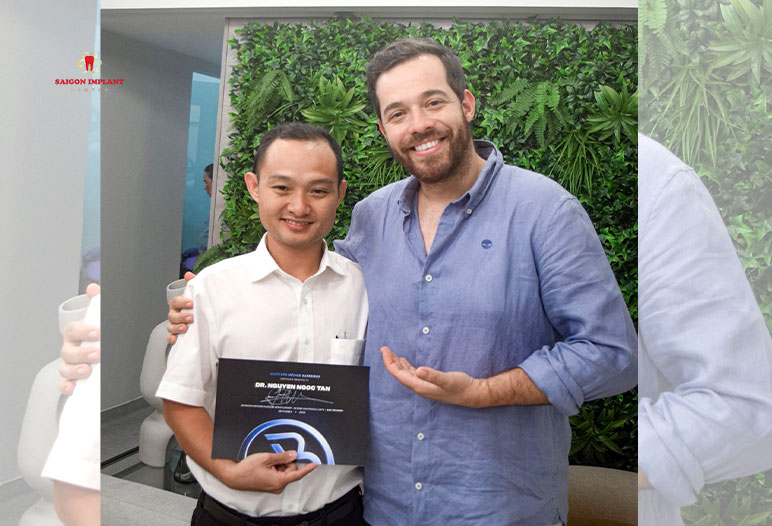
In August 2026, Dr. Nguyen Ngoc Tan, an Implant Dentist Vietnam, completed the advanced training program “Advanced Inferior Alveolar Nerve Surgery – Beyond Anatomical Limits” at Instituto Médico Barreiros in Porto, Portugal.
The program focused on advanced implant surgery involving the posterior mandible and inferior alveolar nerve, particularly relevant when severe bone loss or anatomical limitations make conventional implant placement more challenging. For Dr. Nguyen Ngoc Tan, the training adds to his ongoing experience in complex implant cases, where careful assessment and treatment planning are essential. For patients, that means having more knowledge to consider different surgical options — and knowing when a simpler approach may be the better choice.
QUICK ANSWER:
Instituto Médico Barreiros (IMB) in Porto, Portugal, provides continuing professional development and advanced clinical training for healthcare professionals, including programs focused on complex dental implant surgery and advanced surgical techniques.
The “Advanced Inferior Alveolar Nerve Surgery – Beyond Anatomical Limits” program specifically addresses surgical considerations involving the inferior alveolar nerve and the posterior mandible, where anatomical limitations can make conventional implant placement more demanding.
WHEN ANATOMY BECOMES A LIMITATION IN IMPLANT TREATMENT
Dental implant placement depends not only on the missing tooth but also on the anatomy surrounding the planned implant site. In the posterior mandible, one of the most important anatomical structures is the inferior alveolar nerve.
The nerve travels within the mandibular canal and provides sensation to areas including the lower lip and chin. When teeth have been missing for an extended period, gradual bone resorption can reduce the amount of available bone above the mandibular canal.
As the available bone becomes narrower or shorter, conventional implant positioning may become more difficult.
This situation may be encountered in patients with:
- Long-term loss of posterior mandibular teeth;
- Significant vertical or horizontal bone resorption;
- Limited bone height above the inferior alveolar nerve;
- Anatomical conditions that restrict conventional implant positioning;
- Previous treatment assessments where available bone was considered insufficient; or
- More extensive tooth loss requiring complex implant rehabilitation.
This is where detailed diagnosis becomes particularly important.
A CBCT scan, clinical examination and restorative assessment can help determine the amount and quality of available bone, the position of the mandibular canal and the relationship between the proposed implant position and surrounding anatomical structures.
The objective is not simply to find a way to place an implant. It is to understand what treatment options are realistically available and which one is most appropriate for the individual patient.
QUICK ANSEWR: Can Implants Be Placed When Bone Is Close to the Nerve?
Yes. Depending on the available bone and nerve position, options may include short implants, bone grafting, modified implant positioning, or advanced nerve-related surgical techniques.
IMPLANT DENTIST VIETNAM AND CONTINUING TRAINING IN COMPLEX IMPLANT SURGERY IN PORTO
The advanced program at Instituto Médico Barreiros in Porto provided Dr. Nguyen Ngoc Tan with focused continuing education in one of the more technically demanding areas of implant surgery.
For an Implant Dentist Vietnam, ongoing education is particularly relevant when treating patients whose clinical conditions vary significantly from routine implant cases.
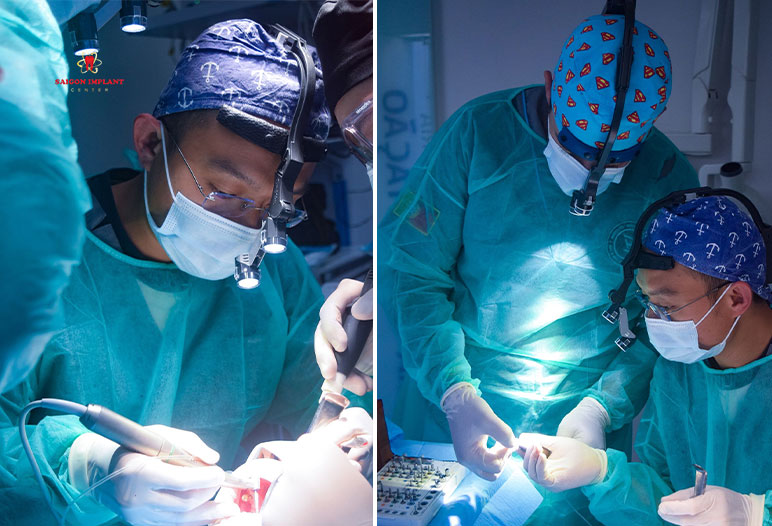
A patient with adequate bone volume and a single missing tooth may require a relatively straightforward treatment plan.
Another patient may present with:
- Extensive bone resorption;
- Long-term tooth loss;
- Periodontal bone destruction;
- Limited anatomical space;
- Previous implant treatment;
- A need for bone augmentation; or
- Multiple missing teeth requiring full-arch rehabilitation.
These situations cannot necessarily be approached using the same protocol. Advanced continuing education allows clinicians to study specific anatomical and surgical challenges in greater depth. It can contribute to a broader understanding of treatment possibilities, limitations and potential risks. However, completing an advanced training program does not by itself define clinical expertise.

A patient’s treatment decisions should be considered in the broader context of a dentist’s clinical experience, diagnostic process, continuing education, treatment planning and ability to explain realistic alternatives. For complex implant cases, these factors work together.

FROM ADVANCED TECHNIQUES TO BETTER TREATMENT DECISIONS
Advanced implant surgery is not about choosing the most complex procedure available. It is about understanding when a particular technique is justified, what risks it involves, what alternatives exist and whether the expected benefits are appropriate for the patient.
For Dr. Nguyen Ngoc Tan at Saigon Implant Center, continuing education in complex implant surgery is part of a broader approach to diagnosis and individualized treatment planning.
Every implant case begins with the patient’s specific anatomy and clinical needs. Bone volume, nerve position, periodontal condition, functional requirements and long-term restorative goals can all influence the treatment strategy.
This is particularly important in cases involving severe bone loss, where the most obvious solution is not always the most appropriate one. A more advanced procedure may sometimes provide an option when conventional treatment is limited.
In another situation, a less invasive alternative may offer a more suitable balance between treatment complexity, risk, function and long-term rehabilitation.
The goal of advanced training, therefore, is not simply to increase the number of procedures a clinician can perform.
It is to strengthen the knowledge and clinical judgment required to evaluate difficult cases and discuss treatment options responsibly.
FROM ADVANCED TRAINING TO BETTER IMPLANT TREATMENT DECISIONS
For patients considering dental implants in Vietnam, advanced surgical training can be relevant when their anatomy presents limitations that may make conventional implant placement more challenging.
However, patients should not assume that an advanced procedure is automatically a better treatment.
A comprehensive assessment may involve evaluating:
- Bone volume and quality;
- The position of the inferior alveolar nerve;
- Periodontal health;
- Existing teeth and previous dental treatment;
- Functional and aesthetic requirements;
- The proposed prosthetic restoration; and
- Long-term oral health objectives.
Based on these findings, treatment may involve conventional implant placement, bone augmentation, short implants, alternative implant positioning, staged rehabilitation or, in selected situations, advanced surgical procedures involving the inferior alveolar nerve.
The value of advanced training is therefore not that every patient requires a more complicated treatment.
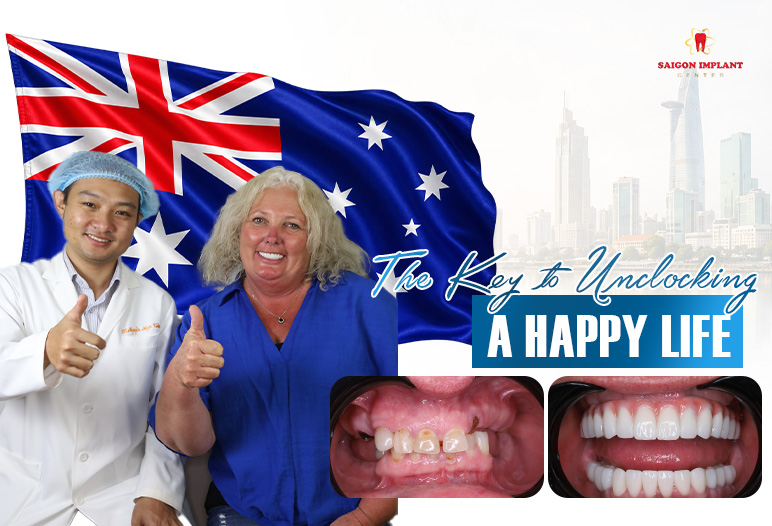
Rather, it can expand the clinician’s understanding of the options that may be considered when conventional approaches are limited.
For patients researching an Implant Dentist in Vietnam, useful questions go beyond the implant brand or treatment price.
It can also be helpful to ask:
- How will my bone and nerve anatomy be evaluated?
- What treatment options are available for my specific condition?
- Are there less invasive alternatives?
- What are the potential risks and benefits of each approach?
- How will the implant treatment connect with the final restoration?
- What is the long-term treatment plan?
These questions can help patients make decisions based on their individual anatomy and clinical needs rather than simply choosing the most advanced-sounding procedure.
A COMPREHENSIVE APPROACH TO COMPLEX IMPLANT TREATMENT AT SAIGON IMPLANT CENTER
Behind the advanced training, Dr. Tan shares:
My advanced training in Porto is part of my ongoing professional development in complex implant surgery. This specialized knowledge broadens my perspective when assessing cases with anatomical limitations and developing an appropriate treatment plan.
At Saigon Implant Center, every implant treatment plan is developed around the individual patient’s condition. Beyond bone structure, the clinician considers the health of the gums and supporting tissues, the location of missing teeth, bite relationship, restorative requirements, overall oral health and long-term treatment goals.
Based on these factors, treatment options can be considered according to clinical necessity, safety, level of intervention and long-term rehabilitation. In some cases, a relatively straightforward approach may be the most appropriate choice. In others, when the clinical situation is more complex, advanced techniques may need to be considered.
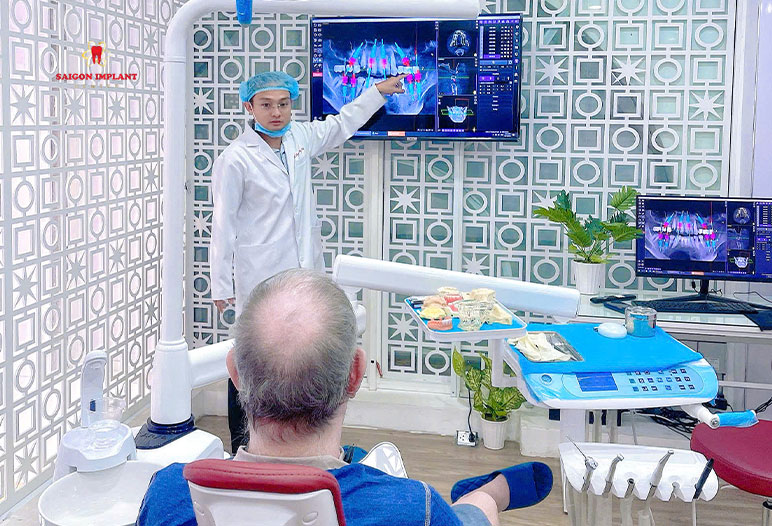
This is the practical value of advanced training for patients: not to make every treatment more complicated, but to give the clinician a broader clinical foundation when considering different treatment options.
For patients seeking implant treatment at Saigon Implant Center, the ultimate goal is a treatment plan based on their individual condition, rather than applying the same approach to every patient.
Because in complex implant dentistry, expertise is not only demonstrated by the ability to perform advanced procedures. It is also demonstrated by knowing how to assess each situation carefully, consider the available options and select the approach that is most appropriate for the individual patient.
We hope that this continued learning will allow us to better support our patients with clearer information, thoughtful treatment planning and options that are appropriate for their individual needs. Because every complex case is different, and every patient deserves a plan that is carefully considered around their long-term oral health.
 Call
Call Booking
 Chat
Chat