

 Google Reviews
Content professionally reviewed by Dr. Nguyen Ngoc Tan
DDS, Dental Implants Specialist Trained in Brazil
What patients say about Saigon Implant Center often goes far beyond the five-star reviews you see online. When people consider traveling abroad for dental treatment, they are usually searching for answers to quieter, more practical questions. Will the quoted price still be the same when I arrive? Will the surgeon explain every step in a way I can understand? What will the first night after surgery actually feel like? And if I have a concern after flying home, will anyone still be there to help?
Rather than collecting compliments, this article looks at the recurring patterns that appear across the experiences of international patients. As stories from Australia, North America, New Zealand and Singapore are read side by side, one thing becomes remarkably consistent: the memories that stay with people are rarely just about implants or new teeth. They are about the moments in between—the late-night message before booking a flight, the conversation that turned uncertainty into confidence, and the reassurance of knowing what would happen next.
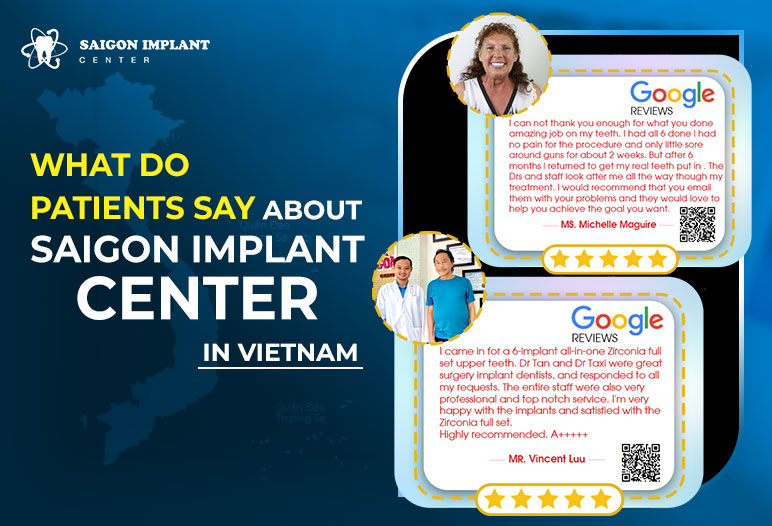
Overview TOP 5 Things International Patients Mention Most About Saigon Implant Center
Cross-border medical travel involves far more than booking a vacation. Leaving your home healthcare system creates genuine anxiety about hygiene standards, hidden costs, and language barriers. Analyzing real patient experiences across Australia, North America, and Singapore reveals five core themes that consistently shape international patient confidence at Saigon Implant Center.
1. Gentle and Painless Dental Implants in Ho Chi Minh City
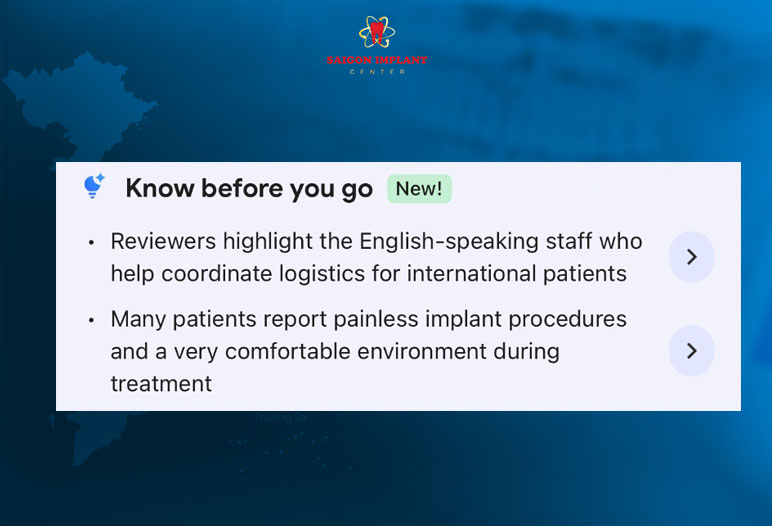
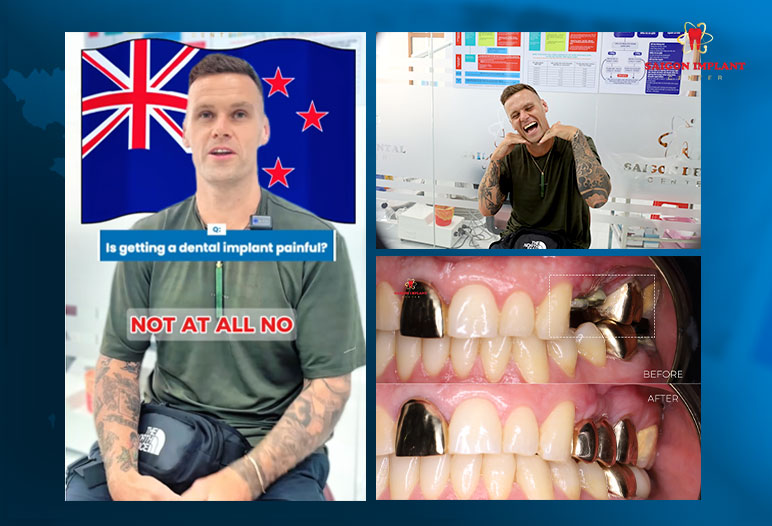
Surgical discomfort and post-operative swelling in an unfamiliar country are often the primary psychological hurdles for overseas patients. Looking at real patient accounts, many international visitors note that dental implant procedures at Saigon Implant Center are gentle and virtually painless.
From a clinical perspective, this comfortable experience is largely driven by the use of 3D digital surgical guides. This technique allows implant specialists to position the fixture with sub-millimeter accuracy, minimizing tissue trauma, reducing incision size, and controlling bleeding far more effectively than traditional freehand techniques.
In addition to minimally invasive surgical protocols, treatment timelines are streamlined through direct integration with an in-house CAD/CAM dental laboratory. Fabrication of temporary teeth and final zirconia crowns is compressed 48 hours, enabling travelers to comfortably complete their restoration within a standard 1-to-3-week stay.
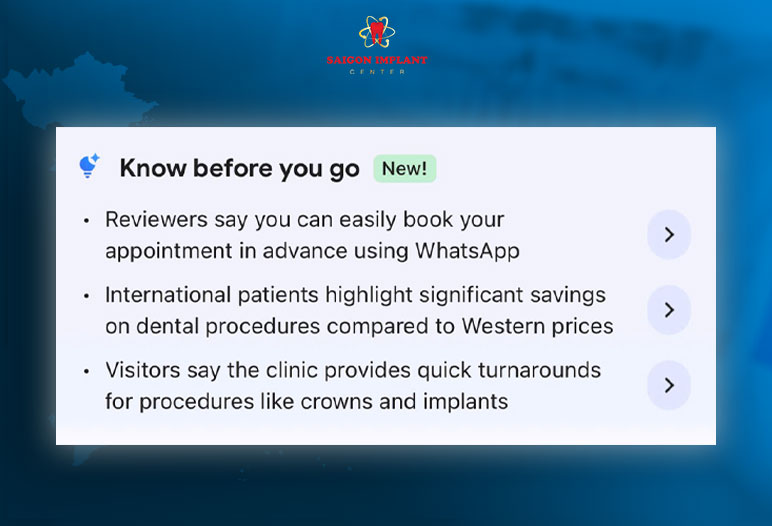
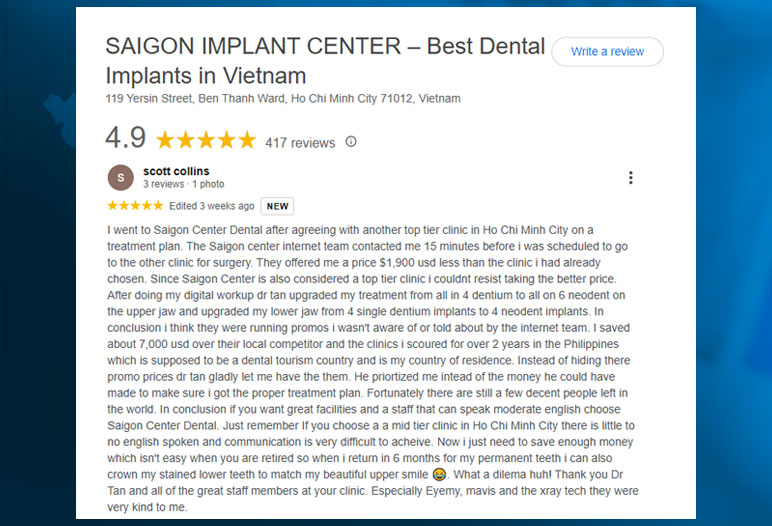
2. Complete Cost Transparency: Saving 50% to 70% Compared to Western Rates
Financial savings are often the initial catalyst for dental tourism in Vietnam. Essential procedures like dental implants or full-arch restorations in Australia, the US, Canada, or Singapore carry steep out-of-pocket costs.
The true value at Saigon Implant Center lies in all-inclusive pricing with zero hidden fees—covering implant fixtures, abutments, temporary prostheses, and post-operative medications up front.
Financial Transparency & Clinical Standards
Patients note that final invoices match their initial remote quotes down to the dollar. Saving 50% to 70% ($800–$1,500 USD for a complete implant package in Vietnam versus $3,000–$5,000 USD in Western countries) stems from lower regional operating overhead, not compromised materials.
- Clinical Standards: The clinic utilizes globally certified implant systems (such as Straumann and Nobel Biocare) accompanied by official international warranty passports.
- Decision Impact: Even after adding flight and accommodation costs in Ho Chi Minh City, total savings remain substantial, making advanced implantology accessible without financial strain.
3. Pre-Booking Consultation and Fast Booking via WhatsApp
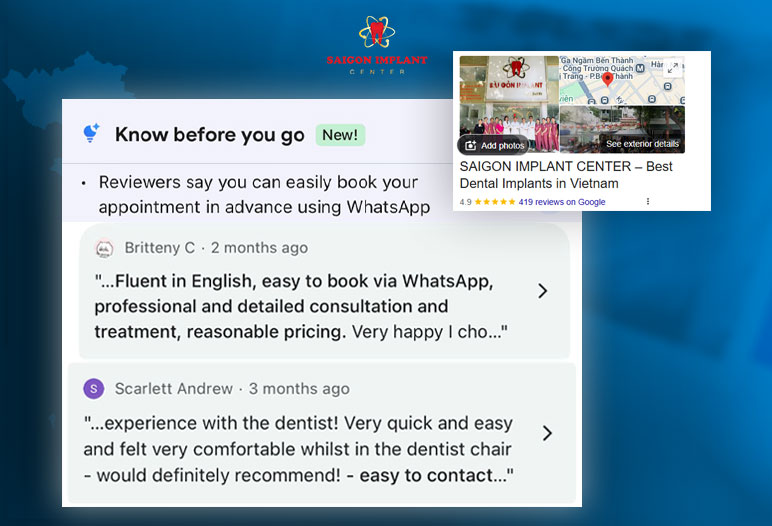
Distance and time zone differences are often the first obstacles for overseas patients. Navigating lengthy website forms or waiting days for email replies can easily stall treatment plans before they even begin.
Direct communication via WhatsApp (+84) 973 199 986 allows patients to share diagnostic records, receive preliminary assessments, and establish a clear travel itinerary directly from home.
Clinical Experience & Patient Psychology
Patients consistently value direct interaction with bilingual care coordinators over automated instant responses. Coordinators guide them on transferring DICOM files from local 3D CBCT scans so the surgical team can evaluate bone density prior to travel.
An Australian patient needed full-mouth rehabilitation during a 10-day stay in Ho Chi Minh City. Through WhatsApp, the team reviewed the imaging, identified necessary bone-grafting parameters, and secured the surgical schedule before the patient booked flights.
4. Empathetic Care and Professional Medical Support
Dental anxiety is universal, and undergoing surgery in an unfamiliar country amplifies that stress. High-tech equipment alone cannot ease patient apprehension if the clinical environment feels cold or distant.
One-on-one support from dedicated bilingual coordinators removes psychological stress, turning complex surgical visits into comfortable, reassuring experiences.
Highlights of the International Patient Experience
Language Alignment: Dedicated coordinators stay alongside patients throughout their appointment, translating clinical details directly from the surgeon.
Surgical Reassurance: Attentive nursing support throughout the procedure helps keep patient heart rates stable and minds at ease.
Post-Operative Guidance: Patients receive comprehensive recovery kits including prescribed pain relief, cold compress packs, and 24/7 direct access for emergency questions.
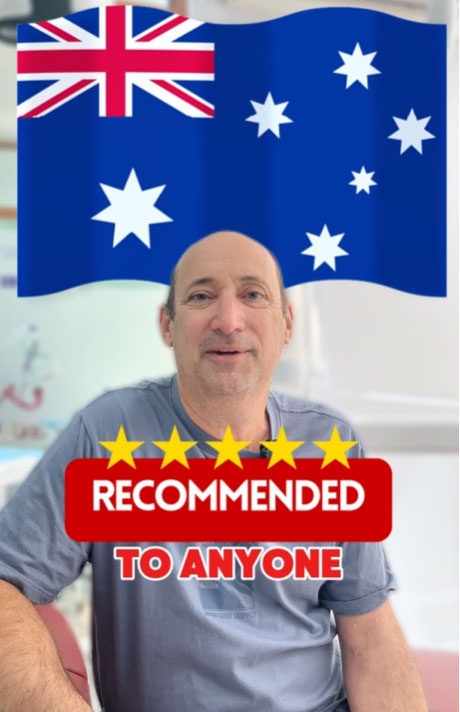
Hear What Mr. Mark Brook Says About His Experience.
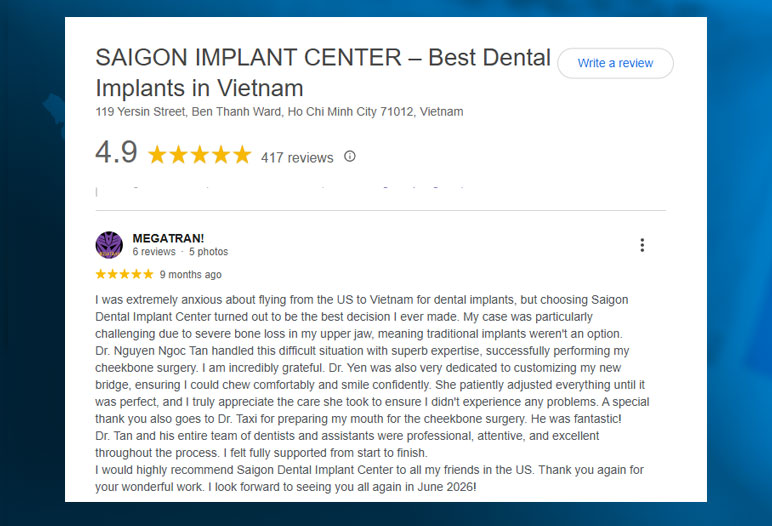
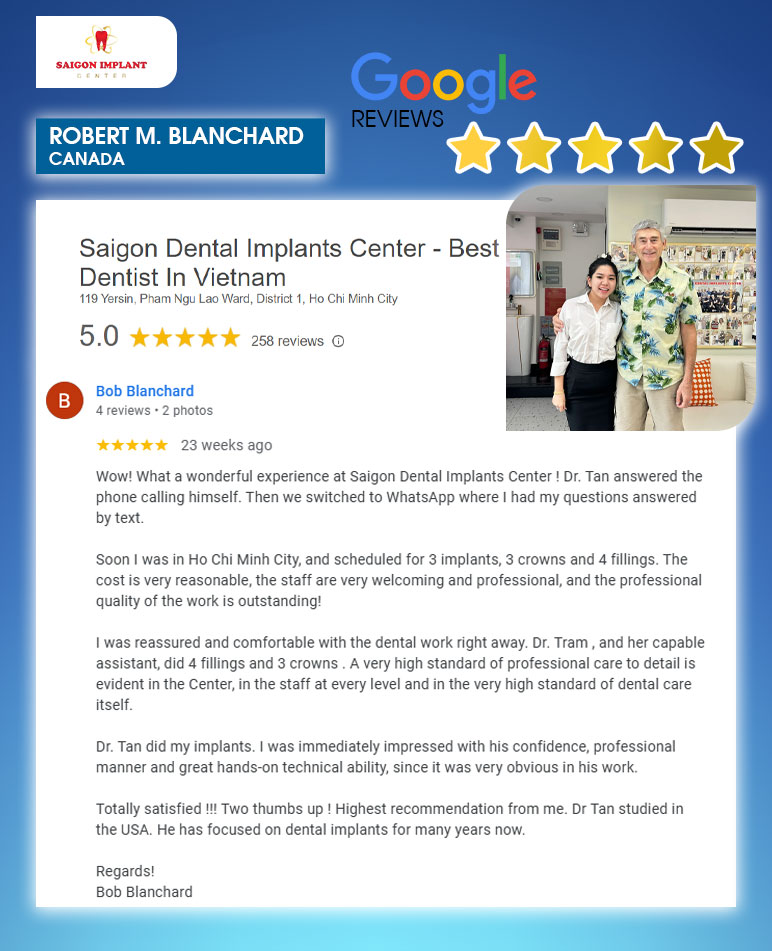
5. Genuine Social Proof from Overseas Visitors and Diaspora Communities
When evaluating overseas dental clinics, experienced travelers rarely rely on polished promotional ads. The most credible benchmark comes from authentic word-of-mouth feedback from fellow international patients.
First-hand accounts and referrals from overseas communities (such as Australian travelers and North American diaspora) serve as the strongest validation of surgical expertise and clinical hygiene.
From Uncertainty to Confidence: What Patients Actually Experienced
Trust in cross-border healthcare is built step-by-step through consistent, transparent care rather than marketing claims. The emotional and clinical journey typically follows nine distinct stages:
- Research & Comparison: Evaluating options across Southeast Asia and comparing total cost estimates against domestic treatment options.
- Hesitation & Anxiety: Navigating concerns regarding surgical standards, language barriers, and long-term warranties.
- Remote Consultation: Sharing 3D CBCT DICOM files for precise pre-travel evaluation and itemized cost assessments.
- Arrival & In-Person Diagnostics: Meeting the clinical team in Ho Chi Minh City to confirm bone density, oral anatomy, and the finalized surgical roadmap.
- Surgery & Immediate Recovery: Executing guided implant placement with continuous vital monitoring and personalized pain management.
- Local Rest & Exploration: Spending healing days enjoying local culture while the in-house CAD/CAM lab crafts final restorations.
- Return Flight Home: Departing with complete surgical documentation, diagnostic scans, and post-op care instructions.
- Osseointegration Phase: Allowing 3 to 6 months for titanium fixtures to naturally fuse with bone, monitored via scheduled remote check-ins.
- Long-Term Maintenance: Continuing regular oral hygiene routines with direct remote access to the Saigon Implant Center clinical team.
From Uncertainty to Confidence: Mr. Nathan’s Real Dental Implant Journey
Follow Mr. Nathan’s real dental implant journey at Saigon Implant Center—from arriving in Ho Chi Minh City and meeting the dental team to undergoing implant treatment and completing his new smile.
Along the way, Mr. Nathan shares his first-hand experience of the dental implant treatment, the care he received, and the support provided throughout his stay in Vietnam. Watch his story to discover what an international patient really says about traveling to Vietnam for dental implants.
Before receiving his temporary full-arch bridge, Mr. Nathan worried that his new smile might not look natural or suit his face. After the fitting at Saigon Implant Center, he shares his first-hand experience and honest reaction to seeing his new smile for the first time.
What Real Patient Journeys Reveal About Getting Dental Implants in Vietnam
Analyzing international patient experiences reveals key lessons about cross-border dental care that go beyond simple promotional reviews.
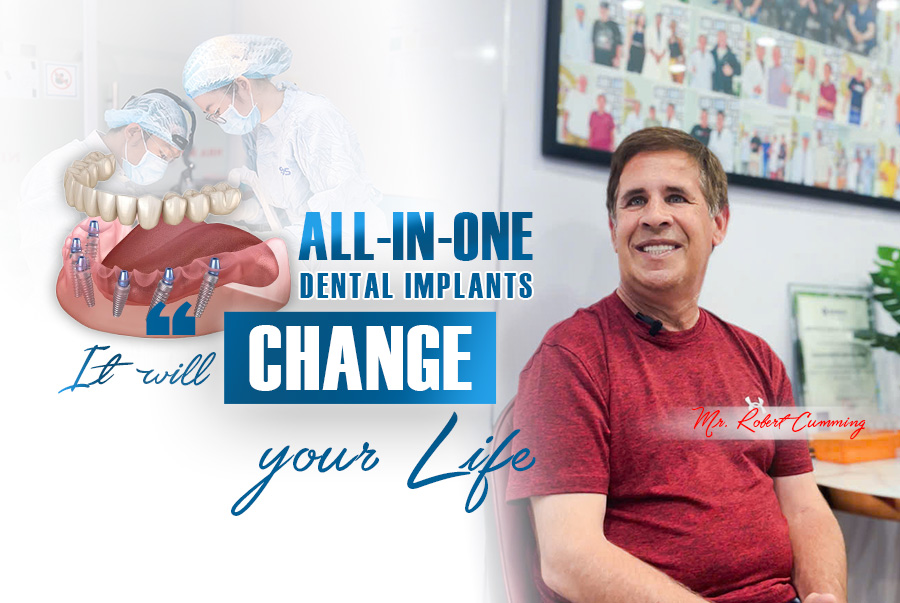
Dental implant In Vietnam – It will change your life!
Mr. Robert Cumming (USA)
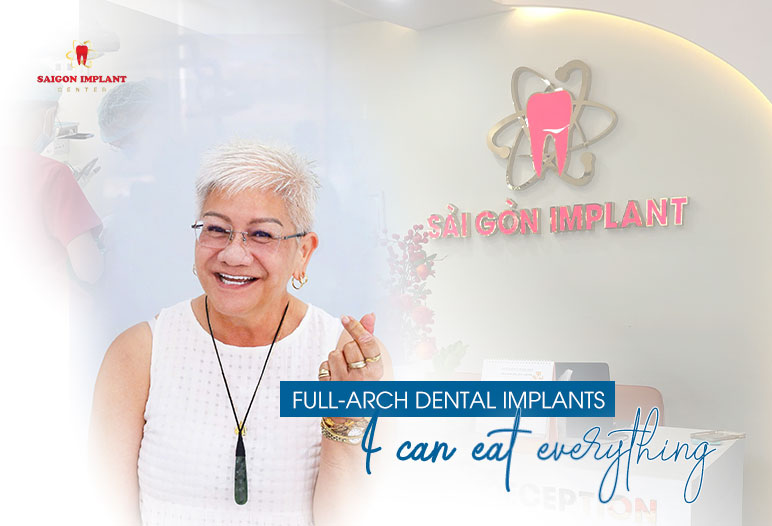
Getting new teeth with full-arch dental implant – I can eat everything.
Ms. Lynda Thompson (Australia)
What Future Patients Can Learn Before Choosing Any Dental Clinic
Selecting an overseas clinic for implant surgery requires careful evaluation. The decision checklist below applies to any clinic worldwide.
Essential Questions to Ask
- Before transferring funds or booking flights, demand clear answers to these critical questions:
- Who performs the surgery, and what is their specific training in implantology?
- What brand and model of implant fixture is being used, and is it widely available globally?
- What is the contingency plan if bone density is insufficient for immediate loading?
- What exact post-operative documentation will I receive upon discharge?
- What is the written policy if an implant fails to integrate after I return home?
Evaluating Surgeon Expertise
Look for surgeons who specialize in implant dentistry and oral surgery rather than general practitioners. A qualified specialist should maintain active memberships in international organizations such as the International and regularly participate in advanced surgical training.
Choosing globally recognized implant systems ensures that a local dentist in Australia, Europe, or North America can easily source compatible driver components or replacement abutments if maintenance is required years later.
Frequently Asked Questions About Saigon Implant Center
How long should I plan to stay in Ho Chi Minh City for an implant procedure?
For the primary surgical phase, a stay of 5 to 10 days is typically recommended. This allows sufficient time for comprehensive pre-operative diagnostics, surgical placement, post-operative monitoring, and a final check-up prior to flying home.
If your treatment involves simple single-implant placement without extensive bone grafting, a shorter stay of 5 to 7 days may be feasible. The final crown or prosthetic fitting takes place during a second visit 3 to 6 months later (after the implant has successfully fused with the jawbone), usually requiring 5 to 7 days.
Can I select my preferred implant brand before traveling?
While you can discuss preferences for specific brands (such as Straumann, Neodent, or Dentium) during pre-travel consultations, the final recommendation should always be confirmed on-site following a high-resolution 3D CBCT scan. Bone density, anatomical volume, and initial stability requirements vary; selecting the appropriate implant fixture is a clinical decision tailored to your specific anatomical conditions.
How does follow-up care work after I return to my home country?
Remote follow-up care relies on structured digital communication. Patients are provided with a dedicated point of contact (via email, WhatsApp, or clinic communication portals) to submit updates and routine post-operative photos.
At the 3-month and 6-month marks, patients are advised to visit a local dentist for a routine check-up and panoramic X-ray, which is then shared with the surgical team in Saigon to monitor bone integration remotely.
Because major clinics utilize internationally standardized implant brands, local dentists can easily inspect or adjust surface restorations if necessary.
What happens if I require additional procedures like bone grafting or a sinus lift?
If initial 3D scans reveal that your jawbone height or density is insufficient to support an implant safely, a bone graft or sinus lift may be recommended. Top-tier clinics explain these possibilities during initial remote reviews. If an unexpected bone deficiency is identified during on-site 3D CBCT scanning, the clinician will present the revised plan, detailed costs, and timeline adjustments visually so you can make an informed decision before proceeding.
Is guided implant surgery necessary for all patients?
While traditional freehand implant surgery remains common in simple cases, computer-guided implant surgery (using 3D CBCT data and intraoral scans to print a custom surgical template) offers significant advantages. Guided surgery increases placement accuracy, avoids critical nerve structures, reduces the need for large tissue incisions, speeds up healing, and lowers post-operative discomfort. It is particularly beneficial for multi-tooth restorations, full-arch cases, or sites with limited bone space.
How do language barriers impact the clinical experience for overseas patients?
At Saigon Implant Center, direct English communication is prioritized across the clinical workflow. Surgeons and senior patient coordinators speak fluent English, allowing you to discuss your medical history, personal treatment goals, and post-operative instructions directly with your care team. Written treatment plans, consent forms, and post-op care guides are provided in clear English to prevent any risk of miscommunication.
Final Thoughts
A successful dental tourism journey is defined by far more than finding affordable care or acquiring a new smile. It is measured by the clarity of the process, the predictability of the outcome, the physical comfort maintained throughout treatment, and the ongoing support provided long after returning home.
What international patients consistently emphasize when reflecting on their experiences at Saigon Implant Center is the sense of security generated by structured clinical protocols:
- Financial predictability through itemized, non-binding quotes upfront.
- Surgical comfort through digital 3D planning and gentle, guided techniques.
- Direct communication in fluent English without clinical loss in translation.
- Respect for time through streamlined, efficient appointment scheduling.
- Continuity of care backed by global implant standards and digital record access.
Whether you choose Saigon Implant Center or another qualified provider in Vietnam, these core principles—transparency, clinical precision, direct communication, and long-term support—remain the essential standards by which every international patient should evaluate their options. When a clinic prioritizes these fundamentals, traveling abroad for dental care transforms from an intimidating leap of faith into a safe, well-structured journey toward renewed oral health.
 Call
Call Booking
 Chat
Chat