

 Google Reviews
Content professionally reviewed by Dr. Nguyen Ngoc Tan
DDS, Dental Implants Specialist Trained in Brazil
Pterygoid implants may offer a fixed-teeth option for selected patients with severe upper-jaw bone loss, especially when conventional implants cannot obtain enough support in the posterior maxilla. By using suitable bone in the pterygomaxillary region, they can become part of a full-arch dental implant plan without necessarily rebuilding every area of lost bone.
But when are pterygoid implants appropriate, how do they compare with sinus lift, bone grafting or zygomatic implants, and can they support All-on-4 or All-on-6? This guide explains the treatment options, planning process, evidence, risks and what international patients should consider before treatment.
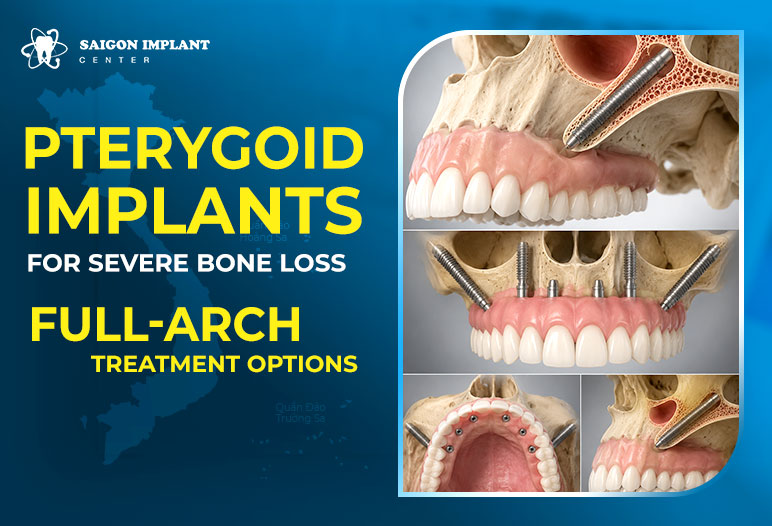
What Are Pterygoid Implants?
Pterygoid implants are dental implants designed to obtain support from the deeper bone in the posterior upper jaw when the usual implant site has lost too much bone. They may be considered when long-term tooth loss, bone resorption and an enlarged maxillary sinus leave limited bone for conventional posterior implants.
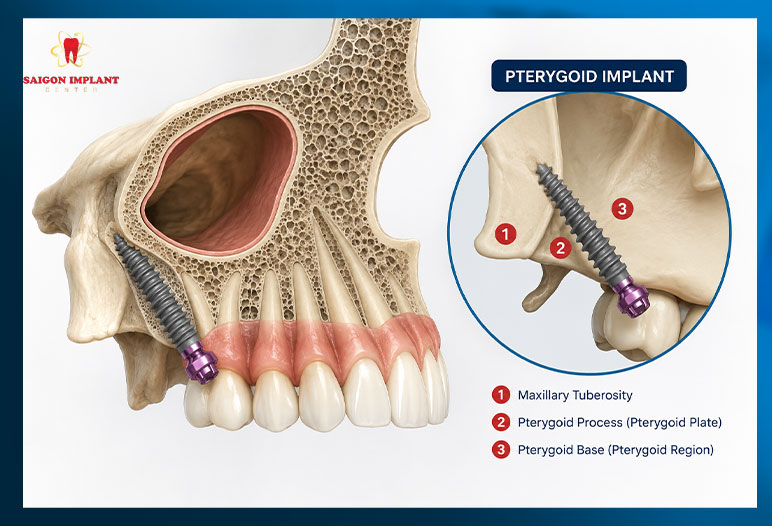
Unlike a conventional implant placed vertically into the remaining jawbone, a pterygoid implant is positioned through the posterior maxillary region toward the pterygomaxillary or pterygoid area. The goal is to use suitable bone in this region to create stable posterior anchorage.
In simple terms, think of it as changing where the implant gets its support rather than trying to rebuild every area of bone that has been lost.
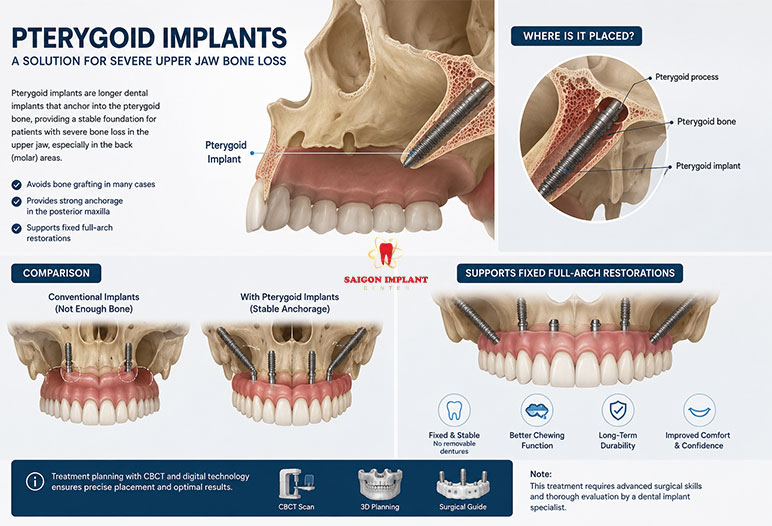
This can be particularly useful in patients with severe posterior maxillary bone loss who want fixed teeth. However, pterygoid implants are not simply “longer implants,” and severe bone loss alone does not mean that they are the right choice.
The anatomy of the posterior upper jaw varies from person to person. The available bone, maxillary sinus, implant trajectory and the position of the final teeth all need to be assessed, usually with three-dimensional imaging such as CBCT.
Pterygoid implants should also be distinguished from full-arch treatment concepts. A pterygoid implant describes where an implant obtains anchorage; All-on-4 and All-on-6 describe how a full arch of fixed teeth is supported. In selected cases, pterygoid implants can therefore become part of an All-on-4, All-on-6 or other full-arch rehabilitation plan.
What Full-Arch Implant Configurations Can Include Pterygoid Implants?
There is no single “pterygoid full-arch” configuration that fits every patient. The number and position of implants depend on the available anatomy and the prosthetic plan.
Conventional or tilted full-arch implants
If enough bone remains in the anterior and posterior maxilla, conventional or tilted implants may be sufficient.
In these cases, adding pterygoid implants may provide no meaningful advantage.
Anterior implants with pterygoid posterior support
In a severely resorbed posterior maxilla, a treatment plan may use implants in the anterior region together with pterygoid implants posteriorly.
This approach has been described in clinical reports of severely atrophic maxillae, including combinations of anterior implants and pterygoid implants for fixed full-arch rehabilitation.
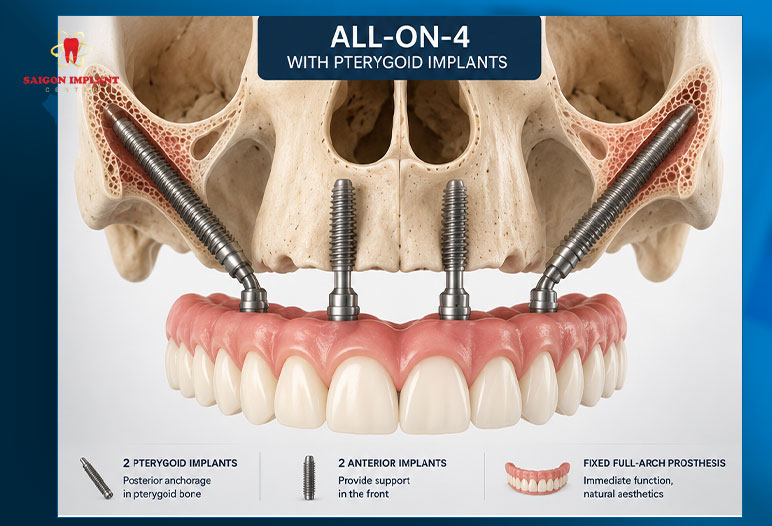
All-on-4 with pterygoid implants
Pterygoid implants can also be incorporated into selected All-on-4-style full-arch rehabilitation strategies.
In this context, All-on-4 describes the full-arch treatment concept, while the pterygoid implant describes the posterior anchorage position.
Recent clinical literature has described an All-on-4 rehabilitation incorporating pterygoid implants in severely atrophic maxillae. A 2025 technical report described 11 patients treated with a digitally planned protocol; all pterygoid implants remained functional at 15 months, although one prosthetic fracture occurred. This is promising but represents an early clinical experience rather than high-level comparative evidence.
Six-implant or other configurations
In some patients, additional posterior support may be considered.
A 2025 finite-element study compared four-, five- and six-implant configurations incorporating pterygoid implants and found the six-implant model had the most favorable simulated stress distribution. Again, this is biomechanical modeling and should not be interpreted as a clinical recommendation for every patient.
The important takeaway is: Pterygoid implants are part of the anchorage strategy. The final full-arch design is a separate prosthetic decision.
Pterygoid Implants vs. Sinus Lift, Bone Grafting and Zygomatic Implants
Pterygoid implants vs. sinus lift
A pterygoid approach may reduce the need for posterior augmentation in selected patients, but it is not a universal substitute for sinus lift surgery. If the anatomy is favorable for conventional implants after sinus augmentation, that may be the more appropriate approach.
Pterygoid implants vs. bone grafting
Pterygoid implants may allow the clinician to work around a severely deficient posterior ridge rather than rebuilding that exact area.
But avoiding grafting is not automatically better. The treatment with fewer surgical steps is only advantageous if it also provides an appropriate and maintainable prosthetic result.
Pterygoid implants vs. zygomatic implants
Zygomatic implants use a different source of anchorage and are generally considered for more advanced maxillary atrophy. Pterygoid implants and zygomatic implants should therefore not be viewed as interchangeable techniques.Some patients may have enough anatomy for pterygoid anchorage.
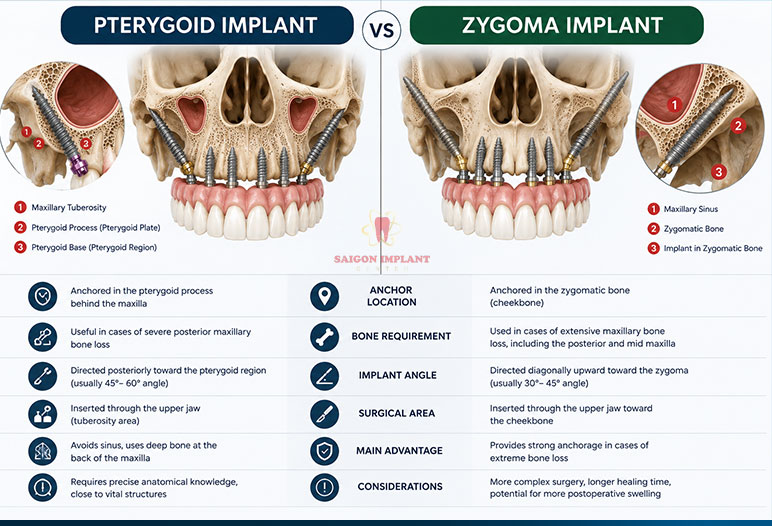
Others may have such extensive maxillary atrophy that zygomatic or another advanced approach deserves consideration. The goal is not to choose the most advanced implant. It is to choose the least complex predictable solution that fits the patient’s anatomy and prosthetic needs.
Who May Be a Candidate for Pterygoid Implants?
Pterygoid implants may be considered in patients with:
- Significant posterior maxillary bone loss
- An atrophic posterior maxilla
- Long-term loss of upper posterior teeth
- Limited bone beneath the maxillary sinus
- A need for posterior implant anchorage
- A full-arch rehabilitation plan
- Suitable anatomy in the pterygomaxillary region
However, severe bone loss alone is not enough to determine candidacy.
The proposed implant trajectory needs to be anatomically feasible, and the resulting implant position must work with the final prosthesis.
Pterygoid implants may not be appropriate when:
- Adequate anchorage cannot be obtained
- The implant trajectory cannot be planned predictably
- The implant position would compromise the prosthesis
- Another treatment option provides a more appropriate solution
- Active periodontal or other oral disease has not been controlled
- Medical or surgical factors increase the risks of treatment
This is why a photograph, missing-tooth count or basic panoramic X-ray cannot determine whether pterygoid implants are suitable. CBCT-based three-dimensional assessment is an important part of evaluating complex posterior maxillary anatomy.
How Is Pterygoid Implant Rehabilitation Planned?
A complex full-arch case should be planned from the final teeth backward—not simply from the available bone forward.
1. Initial assessment
The clinical team reviews the patient’s dental history, missing teeth, existing restorations, periodontal condition and previous implant treatment. For international patients, previous X-rays, CBCT scans and treatment records can sometimes be reviewed before travel.
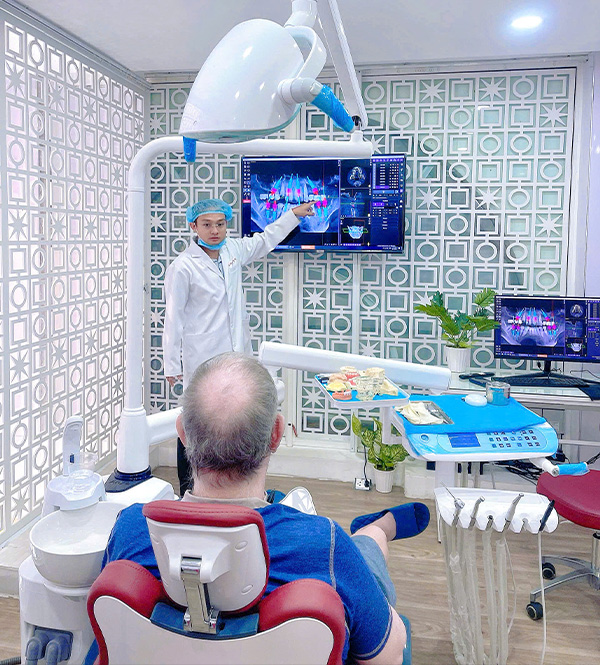
2. Clinical examination
The dentist looks beyond bone availability to understand your overall oral condition, including:
- Remaining teeth and whether they can be preserved
- Gum and periodontal health
- Bite and chewing forces
- Existing dentures, bridges or implants
- Soft tissues and smile aesthetics
- Your functional needs and expectations
This helps determine not only where implants can be placed, but also how the final fixed teeth should be designed.
3. CBCT and three-dimensional assessment
A CBCT scan gives the dentist a three-dimensional view of the upper jaw, helping assess:
- Remaining bone and its thickness
- Maxillary sinus anatomy
- Posterior maxillary and pterygomaxillary regions
- Possible implant trajectories
- How implant positions will work with the final teeth
For complex cases, CBCT is not simply about finding “where an implant can fit.” It helps determine where an implant can be positioned to provide stable support while also working properly with the final full-arch prosthesis.

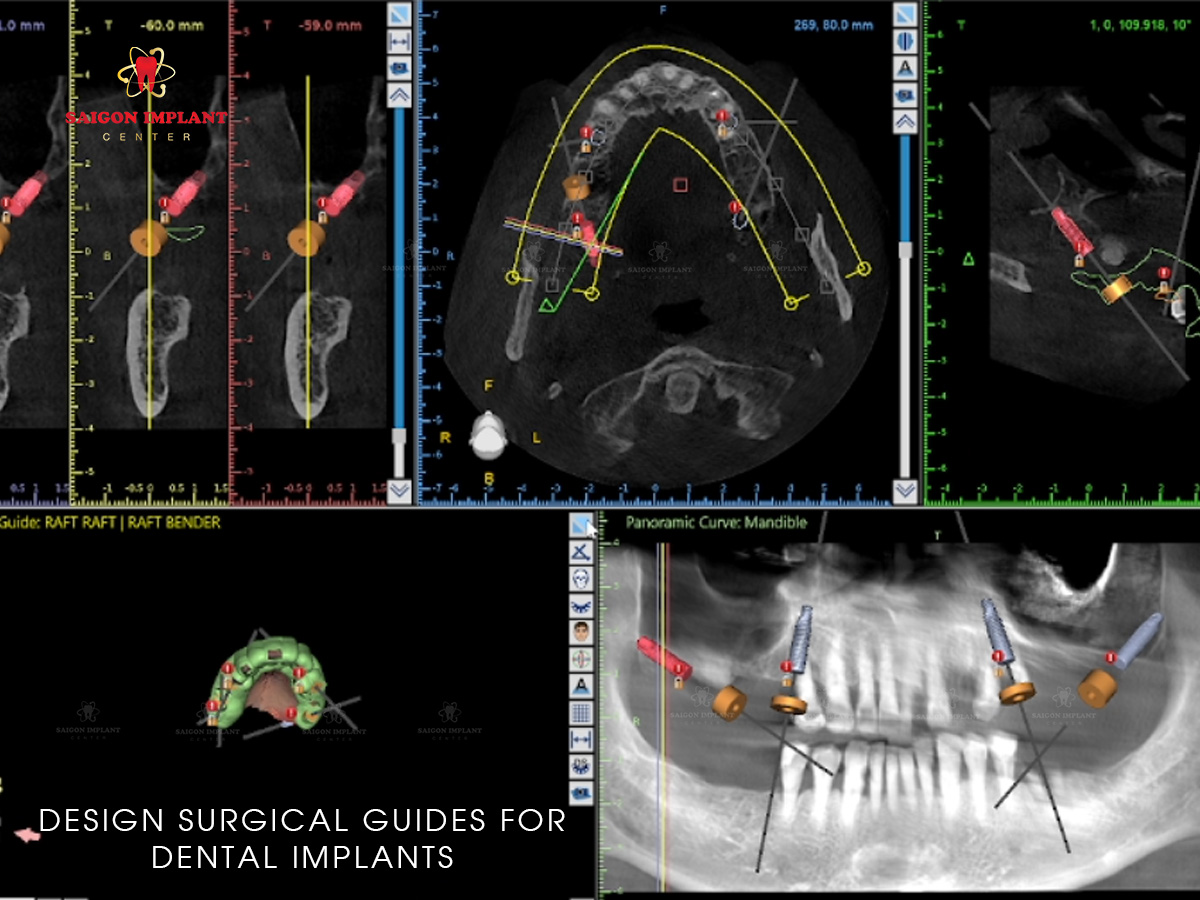
4. Digital and prosthetically driven planning
Digital planning may combine CBCT data with intraoral scans or other digital records. The proposed implant positions can then be evaluated in relation to the planned prosthetic teeth. This helps the team assess implant distribution, emergence, occlusion and hygiene access before surgery.
5. Dental Implant placement
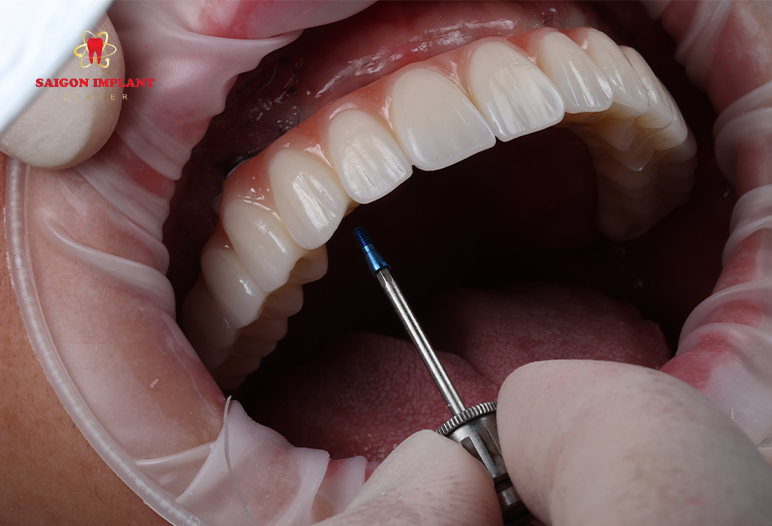
The selected implants are placed according to the individualized surgical plan. Because pterygoid implant surgery involves complex posterior anatomy, surgical experience and accurate three-dimensional planning are particularly important.

6. Temporary fixed teeth, when appropriate
Some patients may be candidates for temporary fixed teeth soon after surgery.
However, immediate loading should never be assumed simply because pterygoid implants are being used.
The decision depends on factors such as implant stability, implant distribution, bone quality, occlusion and the planned prosthetic protocol.
7. Final full-arch prosthesis
After the appropriate healing and prosthetic stages, the definitive restoration can be fabricated and fitted. The final teeth are not simply an accessory added after implant surgery. Their design should influence implant planning from the beginning.
How Much Does Pterygoid Implant Treatment Cost?
The cost of pterygoid implant treatment varies because a pterygoid implant is only one part of a larger full-arch dental implant rehabilitation.
For patients with severe upper-jaw bone loss, the total treatment may include CBCT and digital planning, extractions, implant placement, temporary fixed teeth and the final full-arch prosthesis. Some patients may also require bone grafting or sinus procedures, while others may be able to use available posterior anatomy for pterygoid anchorage without additional augmentation.
This is why two patients receiving “pterygoid implants” can have very different treatment costs.
The number and type of implants also matter. A treatment involving conventional implants, pterygoid implants or a combination may have different surgical and prosthetic requirements. The final restoration—such as a zirconia full-arch prosthesis—can also represent a significant part of the overall cost.
For international patients, comparing clinics based only on the advertised price of an individual implant can therefore be misleading. One quotation may include temporary teeth, the final prosthesis, laboratory fees and follow-up, while another may list only the surgical implant component.
Before comparing prices, ask: What is included in the complete treatment plan?
A useful quotation should clearly explain the diagnosis, surgery, implants, temporary teeth, final prosthesis, laboratory work and any additional procedures. Ultimately, the most meaningful comparison is not simply how much one pterygoid implant costs, but how much the complete treatment will cost to achieve stable, functional and maintainable fixed teeth.
How Long Does Pterygoid Implant Treatment Take?
The timeline for pterygoid implant and full-arch treatment depends on your bone condition, implant stability and whether additional procedures are needed.
For international patients travelling to Vietnam, a 7–10 day stay is often a practical timeframe for the initial treatment stage. During this period, the process may include:
- Initial clinical examination and CBCT
- Digital treatment planning
- Confirmation of the implant and prosthetic plan
- Tooth extractions, if required
- Pterygoid and other implant placement
- Temporary fixed teeth, when clinically appropriate
- Postoperative review before travelling home
Some patients may receive fixed temporary teeth shortly after implant placement when implant stability and the overall clinical conditions allow. This can be particularly convenient for patients travelling from overseas.
However, 7–10 days should not be understood as a guaranteed timeframe for every patient. If you require bone grafting, sinus procedures, staged surgery, treatment of active oral disease or additional healing, the treatment may need to be divided into separate stages.
GET NEW SMILE WITH DENTAL IMPLANTS IN HO CHI MINH CITY, VIETNAM
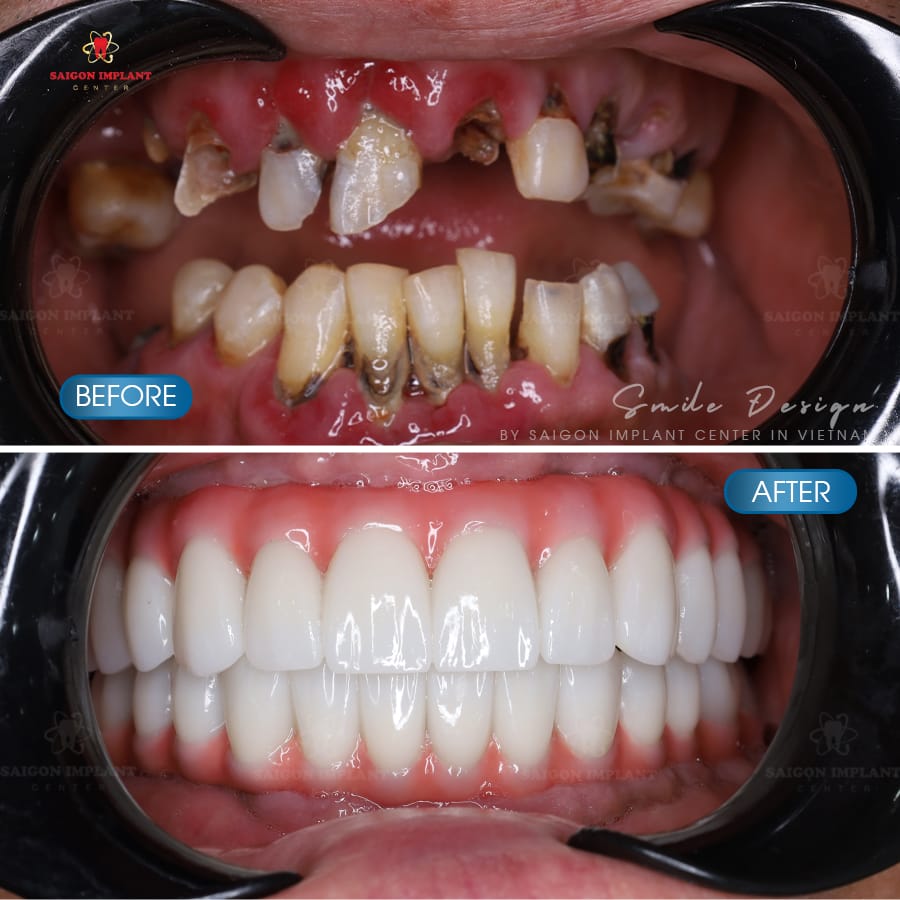
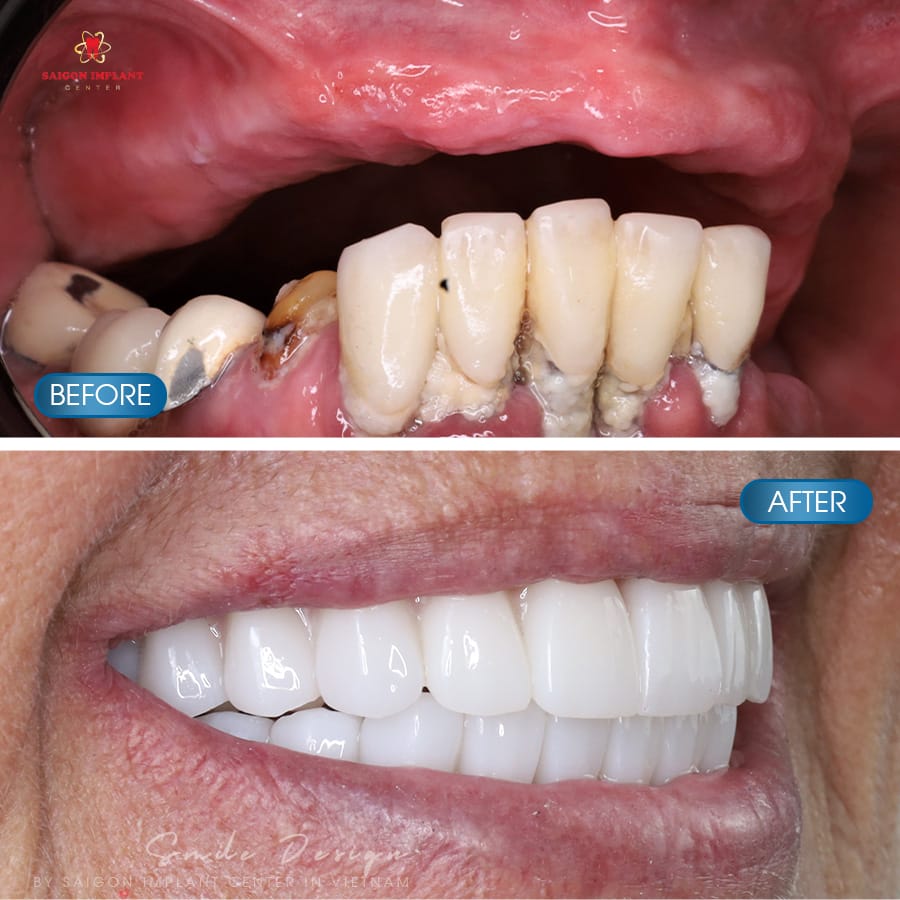
The final full-arch prosthesis may also be completed at a later stage, depending on the healing process and the planned restorative protocol.
If you are planning dental treatment in Vietnam, ask the clinic to provide a proposed timeline before booking your flight. Make sure you understand what can realistically be completed during your first 7–10 days, when you will receive temporary teeth, whether another visit will be required for the final prosthesis, and how follow-up will be managed after you return home.
Planning Pterygoid Implant Treatment as an International Patient
If you are travelling abroad for pterygoid implants or full-arch dental implants, good preparation can save you time, reduce unexpected costs and help you avoid unnecessary trips.
Before you travel
Send the clinic your available dental records in advance, especially:
- Recent panoramic X-ray or CBCT
- Photos of your teeth and smile
- Previous implant or dental treatment records
- Current medications and relevant medical history
- Your main treatment goals
If you already have a CBCT, ask whether the dentist can review it before your trip. This may help the team prepare an initial treatment plan, although the final decision should be made after an in-person examination.
Plan enough time for diagnosis
Do not schedule surgery immediately after landing if your case is complex. Your first visit may include a clinical examination, CBCT, digital scans and bite assessment. The findings may change the initial plan. You may be suitable for pterygoid implants—or conventional implants, tilted implants, sinus augmentation, grafting or another approach may be more appropriate. The treatment should follow your anatomy, not the other way around.
Before booking your trip, confirm three things
1. Treatment timeline
How many visits are expected? Can temporary fixed teeth be provided, and how long should you stay?
2. Total treatment cost
Ask whether the quotation includes surgery, implants, temporary teeth, final full-arch prosthesis, laboratory work and additional procedures if required.
3. Follow-up after returning home
Ask what records you will receive and who will manage your care if you experience a prosthetic or implant-related problem after returning home.
For international patients, the best treatment plan is not simply the one that promises the shortest trip or lowest price. It is the one where you understand what will be done, why it is recommended, what is included, and how your care will continue after you return home.
Frequently Asked Questions About Pterygoid Implants
Can pterygoid implants be used for severe upper jaw bone loss?
Yes, in selected patients. They may provide posterior anchorage when conventional posterior implant placement is limited but suitable anatomy is available in the pterygomaxillary region.
Can pterygoid implants support fixed full-arch teeth?
Yes. They can be incorporated into selected full-arch dental implant rehabilitation plans to provide posterior support.
Can pterygoid implants be used with All-on-4?
They can be incorporated into selected treatment configurations. However, pterygoid implants describe an implant position, while All-on-4 describes a full-arch rehabilitation concept.
Can pterygoid implants be used with All-on-6?
They may be used as part of a six-implant full-arch strategy when the anatomy and prosthetic plan support that approach.
Can pterygoid implants help avoid a sinus lift?
They may reduce the need for posterior sinus augmentation in selected cases, but they are not a universal replacement for a sinus lift. The decision depends on the patient’s anatomy and the overall treatment plan.
Do pterygoid implants require bone grafting?
Not necessarily. One potential advantage is that they may obtain posterior anchorage without rebuilding the deficient posterior ridge. However, other areas of the maxilla may still require augmentation.
Are pterygoid implants suitable for everyone with severe bone loss?
No. Severe bone loss alone does not make someone a candidate. Three-dimensional anatomy, implant trajectory, oral health, prosthetic requirements and relevant medical factors all need to be considered.
Are pterygoid implants better than zygomatic implants?
Neither is automatically better. They use different anatomical sources of anchorage and may be appropriate at different levels or patterns of maxillary atrophy.
Can pterygoid implants be immediately loaded?
Immediate loading may be possible in selected full-arch cases, but it should not be assumed. The decision depends on primary stability, implant distribution, occlusion, bone conditions and the prosthetic protocol.
How long do pterygoid implants last?
Published evidence shows encouraging long-term survival. A 2024 systematic review reported a 10-year cumulative survival rate of 92.5% for pterygoid implants included in the review. This is a population-level finding, not a guarantee for an individual patient.
What is the most important part of pterygoid implant treatment?
The implant itself is only one part of the treatment.
Accurate diagnosis, CBCT-based planning, appropriate case selection, implant positioning, prosthetically driven planning, the final full-arch restoration and long-term maintenance all contribute to the outcome.
What if I have very little bone throughout the entire upper jaw?
Pterygoid implants may not provide enough anchorage on their own. In more advanced cases, the treatment team may need to consider zygomatic implants, grafting, subperiosteal solutions or other advanced rehabilitation strategies.
 Call
Call Booking
 Chat
Chat